
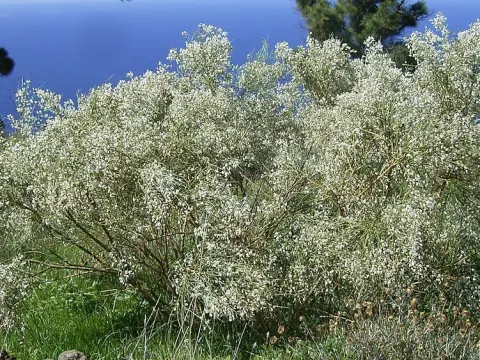
Sahara broom
Genista saharae
Sowing of Sahara broom is carried out under natural or artificial irrigation conditions depending on the climatic zone. The optimal time for sowing seeds is early spring, when the soil warms up to stable positive temperatures.
What the section contains
Sahara broom
Successful germination requires seed stratification or scarification, as the hard seed coat hinders moisture absorption. Seeds are sown at a shallow depth corresponding to the seed size, followed by soil compaction to ensure good contact.
For industrial purposes, such as creating pastures or phytoremediation zones, direct seeding into prepared furrows is common. It is crucial to ensure sufficient soil moisture in the first weeks after germination until a developed root system is formed.
The sowing pattern depends on the intended use of the crop: a row method with narrow spacing is used for creating dense windbreaks. When grown for animal feed, row intervals are increased to ensure light penetration to the lower plant tiers.
In arid regions, it is recommended to use hydroseeding or sprinkling methods during the initial stages to prevent seedling loss under extreme heat. Once established, the plant becomes highly resistant to moisture deficits.
Sahara broom is a typical member of the Fabaceae family, adapted to the extreme arid conditions of North Africa. The plant possesses a unique ability to perform photosynthesis through its stems, which minimizes moisture loss through leaf transpiration.
The crop requires well-drained sandy or stony soils with low humus content. It does not tolerate waterlogging, so areas with high groundwater levels are unsuitable for cultivation.
The temperature regime is characterized by high heat tolerance, though prolonged frosts can negatively impact young shoots. The optimal temperature range for vegetation is between +20 and +40 degrees Celsius.
The plant has a high requirement for solar radiation, so any form of shading, including tall weed growth, suppresses its development. It is important to consider the light regime when selecting sites for commercial planting.
Sahara broom is notable for its high symbiotic activity with nitrogen-fixing bacteria. This allows the plant to enrich the soil with nitrogen, making it a valuable component in land reclamation programs for degraded soils.
The economic productivity of Sahara broom is primarily evaluated through its use in animal husbandry as a source of roughage. In desert conditions, it provides green forage during periods when other vegetation dries out.
The yield of green mass directly depends on rainfall amounts and the level of agronomic care provided. In unfertilized natural stands, productivity may be low, but it increases significantly with proper supplementation.
Seed yield is a subject of breeding interest, as collection is hampered by the uneven ripening of pods. To improve seed harvesting, it is necessary to implement mechanized collection methods at optimal phenological phases.
Sahara broom biomass can be used as raw material for compost production, as its high nitrogen content accelerates organic humification processes. This direction is considered promising in ecological agriculture.
To assess the real yield of specific varieties, multi-year field trials on test plots are necessary, taking into account annual climatic fluctuations in the region.
The main threats to Sahara broom stands include specialized pests, such as weevils and caterpillars, which damage the plant's reproductive organs. Their activity can significantly reduce seed productivity in plantations.
Fungal diseases, caused by excessive soil moisture or poor aeration in the root zone, can lead to the development of root rots. This is most dangerous for young plants during the active growth stage.
Competition with aggressive invasive weed species poses a serious danger during the initial plantation establishment. Young broom seedlings develop slowly and require regular weeding in the first year.
In anthropogenic landscapes, overgrazing is a significant risk that depletes nutrient reserves in the root system. Implementing a rotational grazing system is necessary to prevent the degradation of the stands.
Control measures include a comprehensive approach: using pathogen-resistant plant forms, adhering to irrigation schedules, and implementing agronomic soil management practices to maintain phytosanitary health.