
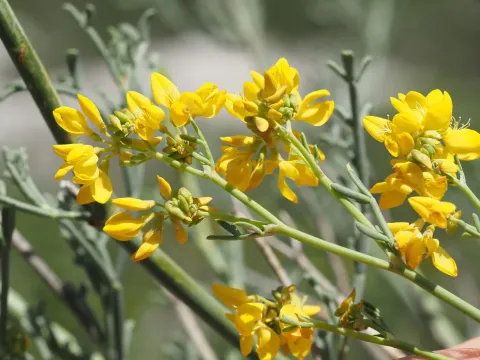
Rush-like scorpion vetch
Coronilla juncea
Rush-like scorpion vetch, scientifically known as Coronilla juncea, is a perennial legume distinguished by its rush-like, nearly leafless green stems. It belongs to the Fabaceae family and is native to the Mediterranean region.
What the section contains
Rush-like scorpion vetch
The plant has evolved in climates characterized by hot, dry summers and mild, moist winters. Consequently, it is highly adapted to rocky or calcareous soils where water retention is low and drainage is excellent.
Botanically, it functions as a xerophyte. It possesses a deep taproot system that allows the plant to explore subsoil layers for moisture, making it an excellent candidate for stabilizing unstable slopes.
In terms of agricultural utility, Coronilla juncea serves as an important nitrogen-fixing species. By converting atmospheric nitrogen into a plant-available form, it contributes significantly to soil health and fertility in nutrient-poor environments.
Its role extends to biodiversity management. The plant provides vital habitat and resources for pollinators, particularly in the Mediterranean Basin, where it blooms in spring and early summer.
Success in cultivating Coronilla juncea depends heavily on light and drainage. The species thrives in full sun and requires well-aerated, stony, or sandy substrates to prevent root-zone suffocation.
Temperature sensitivity is a key factor to consider. While it is hardy in Mediterranean conditions, it is not tolerant of prolonged severe frost. Sites with good cold-air drainage are preferable to avoid frost pockets.
Soil chemistry should favor alkalinity or neutrality. High calcium availability is generally beneficial for this species, reflecting its natural habitat on limestone outcroppings.
Water management involves protecting the plant from excessive moisture. During the establishment phase, supplemental irrigation may be required, but mature plants exhibit high drought tolerance and should generally be left to rely on natural precipitation.
The planting density should allow for optimal airflow between the canopy layers. Overcrowding can lead to humidity pockets, which increases the susceptibility to fungal infections and reduces the longevity of the stand.
Fungal diseases are the primary threat, especially if the plants are subjected to poorly drained soil conditions. Root and collar rots often manifest following periods of high rainfall or improper irrigation.
Insect pests can severely impact reproductive output. Seed-feeding weevils and other coleopterans frequently target the developing legumes, requiring careful monitoring if seed production is the primary goal.
Aphid infestations are a common issue during the initial growth flush of the season. Heavy infestations can lead to stunted growth and the transmission of viral diseases, which may spread across the planting.
Weed competition during the seedling stage is critical. As a slow-growing perennial in its first year, Coronilla juncea requires diligent weed control to ensure it can successfully establish its root system.
Preventative strategies should focus on maintaining high plant vigor through proper soil preparation and spacing. Integrated pest management practices remain the gold standard for long-term health in these plantings.