
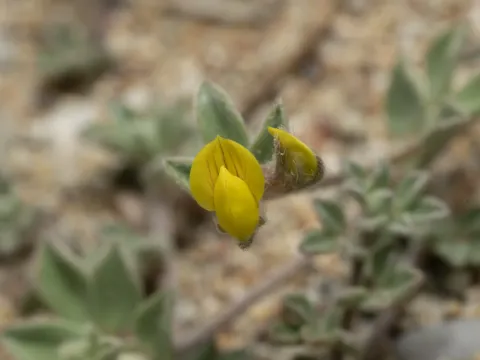
Saltmarsh bird's-foot trefoil
Lotus halophilus
Lotus halophilus, commonly known as saltmarsh bird's-foot trefoil, is a specialized legume species adapted to challenging environmental conditions. The optimal sowing time is early spring, once soil temperatures consistently reach 8–10 degrees Celsius to facilitate germination.
What the section contains
Saltmarsh bird's-foot trefoil
Precision in seedbed preparation is vital, as the seeds are small and require intimate soil contact for moisture absorption. Seeding depth should be maintained between 1.5 and 2.5 centimeters to ensure the seedling has sufficient energy to emerge.
Using scarified seeds is highly recommended to break physical dormancy and achieve uniform emergence across the field. This uniformity is crucial for competitive growth against potential weed pressure during the establishment phase.
In arid or semi-arid regions, it is common practice to sow this legume under a cereal cover crop. This protective canopy shields young seedlings from intense sun and wind exposure, significantly increasing survival rates in the first months of life.
Post-sowing consolidation with a light roller is encouraged to improve soil-to-seed contact and capillary water movement, which are essential for consistent development in saline soil environments.
The primary advantage of Lotus halophilus is its exceptional tolerance to soil salinity. This characteristic makes it a valuable candidate for the reclamation of degraded lands that are unsuitable for conventional agricultural crops.
As a halophytic plant, it thrives in open, sunny environments. While it demonstrates strong drought resistance, optimal biomass production requires adequate water availability during peak vegetative growth stages.
The species performs well on a wide range of soil textures, particularly clay and silty-clay soils. Its ability to form a symbiotic relationship with nitrogen-fixing bacteria allows it to enrich poor soils naturally.
It prefers neutral to slightly alkaline pH conditions. Proper field drainage is important, as prolonged waterlogging can lead to hypoxia in the root zone and increase susceptibility to soil-borne pathogens.
The plant demonstrates high adaptability to temperature extremes. However, a consistent snow cover or mulch is beneficial in colder climates to protect the crown and ensure successful overwintering.
Yield potential is highly dependent on the level of soil salinity and the effectiveness of crop management. Under irrigation, this legume can produce significant amounts of high-quality green forage, making it an excellent fodder resource.
Harvesting for forage should occur during the early flowering stage. This phase provides the best balance between total dry matter volume and nutritional density, including crude protein and essential minerals.
With sufficient water, the crop shows strong regrowth potential, allowing for multiple harvests per season. This intensive management approach maximizes the land-use efficiency of often unproductive areas.
Seed production is moderate. Achieving high yields requires minimizing harvest losses caused by pod dehiscence. Timing is critical, with collection occurring when pods transition from green to brownish-black.
Over time, the extensive root system helps improve soil structure by increasing porosity and reducing bulk density, which indirectly benefits the overall fertility and yield potential of the plot.
Root rot, driven by stagnant water and poor soil aeration, represents the most significant threat to plant stands. Ensuring proper drainage is the most effective preventative measure against these fungal attacks.
Pests, particularly various species of weevils, can significantly affect both seedling establishment and seed production. Monitoring populations during the budding and flowering stages is standard practice.
- Powdery mildew — a fungal disease that can spread rapidly in dense, poorly ventilated stands.
- Leaf-eating beetles — can cause significant defoliation if left uncontrolled.
- Aphids — may infest young shoots, drawing away nutrients and weakening the plant.
Integrated pest management and crop rotation are essential to prevent the buildup of soil-borne pathogens. Maintaining optimal plant density prevents the microclimate from becoming overly humid, which discourages fungal spread.
Early detection of disease via regular scouting allows for targeted interventions, reducing the need for broad-spectrum chemical applications and preserving the biodiversity of the field.
Forage harvesting is best performed using equipment that minimizes leaf shatter. Cutting should be carried out in the morning hours to allow for rapid wilting and drying, which preserves the quality of the fodder.
When preparing hay, frequent, gentle turning of the windrows is necessary to ensure uniform moisture reduction. This helps prevent molding and ensures the nutritional content is stable during storage.
For seed production, combine harvesters must be calibrated for gentle threshing to prevent seed coat damage, which can negatively impact germination percentage in subsequent planting seasons.
Post-harvest conditioning includes thorough cleaning to remove organic debris and drying to a safe moisture content of approximately 12–14% for long-term storage in cool, dry conditions.
Proper harvest management not only ensures a high-quality product but also promotes the longevity of the plant crown, ensuring robust growth and productivity in the following years.