
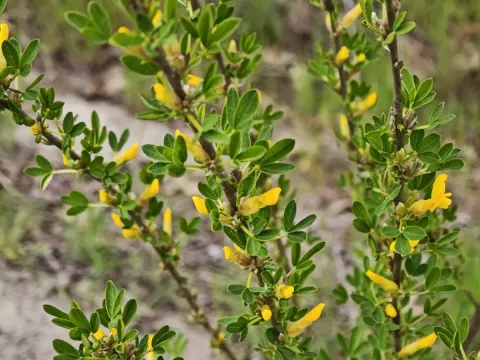
Russian broom
Cytisus ruthenicus
Russian broom belongs to the Fabaceae family and can be propagated by seeds or cuttings. Seeds require stratification at low temperatures for several weeks before spring sowing to improve germination rates.
What the section contains
Russian broom
The seeds should be sown in well-drained, sandy soil at a depth of 1-2 cm. Maintaining consistent moisture in the seedbed is essential until the seedlings are firmly established.
Vegetative propagation is achieved through semi-hardwood cuttings taken in mid-summer. These cuttings are placed in a mixture of peat and perlite to encourage root development under mist conditions.
Seedlings grow relatively slowly during the first year, so they should be kept in nursery beds or containers until they are robust enough to be transplanted into the field.
When planting in the landscape, ensure adequate spacing between individual plants, as Russian broom prefers good airflow to thrive and maintain its shape.
Russian broom is a heliophilic plant, meaning it requires full sun to produce its iconic yellow flowers in abundance. Shade will result in weak, spindly growth and reduced flowering.
The plant is highly adaptable to poor, dry soils, including sandy or rocky terrain. It thrives where other plants might struggle, making it an excellent candidate for slope stabilization.
It is exceptionally cold-hardy and drought-tolerant once established. It does not tolerate waterlogged soil, so proper drainage is non-negotiable for long-term health.
The soil pH should ideally be neutral or slightly alkaline. In acidic soils, the addition of lime is recommended to create a more suitable environment for the shrub.
Maintenance pruning is best performed after the flowering season concludes. Cutting back the tips of the shoots helps maintain a compact shape and promotes denser foliage for the following year.
The most common disease affecting this plant is powdery mildew, which appears as a white coating on the leaves during humid or stagnant weather conditions.
Pests such as broom moths and aphids can infest the plant during the growing season. Regular monitoring of the foliage is recommended to catch infestations early.
Effective management includes removing and destroying infected branches if fungal spots appear. Providing sufficient space between plants is key to minimizing humidity-related diseases.
In cases of severe aphid or moth infestation, application of appropriate horticultural oils or insecticides may be necessary to protect the plant's health.
Cultural practices, such as ensuring full sun exposure and avoiding overhead watering, significantly reduce the risk of common fungal issues in Russian broom.