
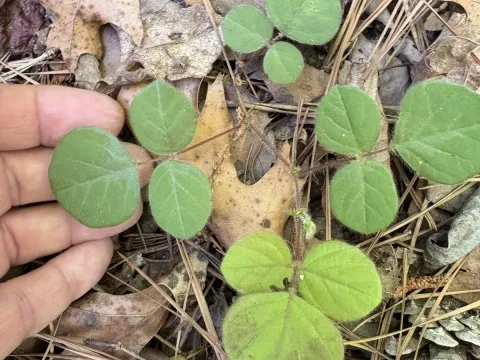
Roundleaf ticktrefoil
Desmodium rotundifolium
Roundleaf ticktrefoil Desmodium rotundifolium is a perennial herbaceous legume belonging to the Fabaceae family. It is recognized for its trailing growth habit and its role as a high-quality forage plant in various pasture systems.
What the section contains
Roundleaf ticktrefoil
The sowing process begins when soil temperatures consistently reach 12–15 degrees Celsius in the spring. Ensuring a firm seedbed is essential, as the seeds are small and require good soil-to-seed contact for successful germination and early establishment.
Seeds should be planted at a shallow depth of approximately 1–2 centimeters. Row spacing should be determined by the intended end-use of the crop, whether for seed production, soil stabilization, or dense forage stands in a grazing rotation.
Inoculation with appropriate Rhizobium strains is highly recommended during sowing. This symbiosis is critical for effective nitrogen fixation, which significantly reduces the need for synthetic nitrogen fertilizers throughout the life of the stand.
Growth during the seedling stage is notably slow compared to other forage grasses. Weed control during the first season is vital to prevent the crop from being choked out while it establishes its root system and begins to creep across the soil surface.
This crop thrives in well-drained sandy or loamy soils. It displays a preference for neutral to slightly acidic soil conditions and does not tolerate waterlogged areas, which can cause root rot and rapid loss of plant vigor.
Roundleaf ticktrefoil exhibits moderate shade tolerance, making it an excellent candidate for inclusion in silvopastoral systems or understory grazing. However, it achieves peak biomass production when exposed to full sunlight.
Climate requirements include moderate precipitation during the growing season. While the plant can survive short periods of drought by entering a period of physiological dormancy, consistent moisture is necessary to maximize forage yield.
Nutrient management focuses on maintaining adequate levels of phosphorus and potassium. These elements are essential for the development of nodules and the structural integrity of the plant, especially in low-fertility soils.
The plant is relatively hardy regarding temperature fluctuations but is susceptible to severe frost damage in the dormant state. Proper site selection that avoids low-lying frost pockets is recommended to ensure long-term stand sustainability.
Fungal diseases, particularly anthracnose and powdery mildew, represent the most significant threats to foliage health. These pathogens spread rapidly under conditions of high humidity and poor air circulation within the canopy.
Insect pests such as leaf-eating beetles and weevils can cause substantial foliage damage. Regular scouting is required to monitor populations, and integrated pest management strategies should be applied to prevent economic losses.
Root-knot nematodes can interfere with the plant's ability to fix nitrogen by targeting the root nodules. Crop rotation practices are the most effective method for managing nematode populations in the field over time.
Excessive humidity combined with warm temperatures creates an environment conducive to various leaf spot diseases. Ensuring proper spacing and preventing overgrazing can help improve airflow and reduce the incidence of these infections.
To mitigate disease pressure, it is essential to source high-quality, disease-free seed and adhere to strict sanitation practices when moving machinery between fields. Strengthening plant health through proper fertilization is also a key preventive measure.