
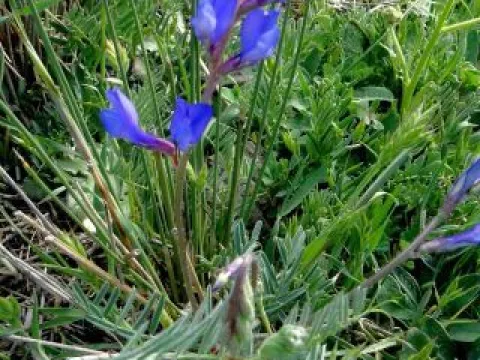
Sainfoin vetch
Vicia onobrychoides
Sainfoin vetch is a perennial legume that thrives when sown early in the spring, once soil temperatures reach 5–8 degrees Celsius. This timing allows the plants to utilize winter moisture reserves efficiently, ensuring robust seedling establishment during the early growth stages.
What the section contains
Sainfoin vetch
Seed depth should typically range from 3 to 5 centimeters, depending on the soil texture and moisture profile. For small-seeded legumes, it is critical to ensure proper soil-to-seed contact by lightly compacting the surface after sowing to promote uniform germination.
A seeding density of approximately 400–500 viable seeds per square meter is recommended to establish a high-quality stand. While it can be grown as a pure stand, many farmers opt for mixes with grasses to improve forage quality and stability over time.
The crop shows strong early vigor, which helps it compete effectively against weeds. Early sowing ensures that the plant develops a deep, resilient root system, which is essential for surviving drought stress and frost during later growth phases.
In regions with milder winters, fall sowing is sometimes practiced; however, spring remains the gold standard for consistent establishment. Producers should avoid overcrowding the stand to prevent lodging and maintain adequate airflow, which discourages fungal development.
As a plant native to the Mediterranean region, Sainfoin vetch is highly drought-tolerant. It is well-suited for steppe and semi-arid environments, where rainfall is often unpredictable, making it a reliable choice for sustainable forage production in dry zones.
The crop is adaptable to various soil types but prefers fertile chernozem or chestnut soils. It shows a good tolerance for slightly alkaline conditions, meaning it can be grown successfully in areas with high lime content without significant growth inhibition.
Soil aeration is a vital requirement, as the plant does not tolerate waterlogging. Poor drainage inhibits the development of symbiotic nitrogen-fixing bacteria, which are crucial for the plant's health and its ability to improve soil fertility through nitrogen fixation.
While the plant is hardy and can withstand brief spring frosts, it prefers a temperate climate to maximize growth. Adequate solar exposure is necessary for the plant to achieve its full potential in biomass production and flowering consistency.
Agronomic management should include phosphorous and potassium fertilization to support stem strength and overall nutritional quality. Because it is a legume, nitrogen fertilizer is generally unnecessary, as the plant provides its own nitrogen through biological fixation.
The yield of Sainfoin vetch varies depending on environmental conditions, stand management, and the frequency of mowing throughout the season. Under optimal conditions, the crop produces a reliable supply of high-protein dry matter for livestock consumption.
Maximum productivity is typically achieved during the second and third years after establishment, once the root system has fully expanded. Proper management of cutting intervals is essential for maintaining stand longevity and sustaining yields over several years.
The regrowth capacity is moderate; while the plant recovers after mowing, it requires a recovery period to replenish root reserves. This rest period is vital for surviving the winter and ensuring vigorous growth during the following season.
For seed production, harvesting must be timed carefully as bean maturation can be uneven across the field. Harvesting should commence once the majority of pods show signs of discoloration and dryness to prevent seed shattering in the field.
Seed yields are generally consistent if standard agronomic practices are followed. Properly cleaned and stored seeds can remain viable for 3 to 5 years, providing flexibility for producers in their planting schedules and crop rotation strategies.
Powdery mildew is one of the most common diseases, especially during periods of high humidity and poor air circulation within the stand. Managing this requires keeping the field clean and ensuring that mowing intervals are optimized to prevent foliage overgrowth.
Various leaf spot diseases can also occur, particularly on stands that are under stress or poorly maintained. Implementing a diverse crop rotation is the primary defense strategy to prevent the buildup of pathogens in the soil over several growing seasons.
Insects like the clover root weevil can damage young seedlings by feeding on roots or growing points. Using treated, high-quality seed and scouting fields early in the season can significantly reduce the potential impact of these pests on stand establishment.
Aphids may occasionally threaten the crop during the flowering phase by feeding on floral tissues and sap. Monitoring the population levels and using biological control methods when necessary helps to protect the potential seed yield and plant vitality.
Maintaining clean fields free of weeds is crucial, as many weeds act as alternative hosts for pests and diseases. Providing spatial isolation from other legume crops can also help manage the local infectious pressure and improve overall crop health.
The primary use of Sainfoin vetch is the production of high-quality hay or silage. The ideal time to mow is at the early flowering stage, as this is when the protein and carbohydrate levels in the biomass are at their peak for livestock feed.
When making hay, it is important to prevent over-drying under direct sunlight, which causes the loss of protein-rich leaves. Tedding and curing in windrows or utilizing forced-air drying systems are recommended to preserve the feed's nutritional integrity.
Harvesting for green forage can be done in stages, allowing for continuous utilization throughout the growing season. The fodder is highly palatable to various types of livestock and is considered an excellent source of digestible nutrients.
When ensiling, managing moisture content is critical due to the high protein concentration of the material, which requires proper fermentation conditions. The addition of silage inoculants can improve the stabilization and shelf-life of the final product.
The residual root biomass left after harvest serves as a valuable nitrogen source for subsequent crops in the rotation. This makes Sainfoin vetch an important tool for ecological soil improvement and long-term fertility management in agricultural systems.