


Reference · Crops
Sainfoin
Onobrychis
Sainfoin is typically sown in early spring as soon as the soil can be worked. This timing is essential to ensure the crop takes advantage of available moisture, which is critical for rapid germination and establishment in various soil conditions.
3
items
What the section contains
Marketplace
Products in this section · 12


Sainfoin
Intercropping with cereals is a common strategy in many regions. By undersowing sainfoin with a companion grain crop, farmers can maximize land usage during the establishment year while the sainfoin develops its extensive root system underneath.
The seeding rate must be balanced according to the seed size and the desired density of the stand. Using standard grain drills with calibrated spacing helps maintain uniform emergence and prevents excessive competition for light and nutrients among seedlings.
Seed scarification is often recommended to break seed dormancy and improve overall germination rates. This biological pretreatment ensures that the crop emerges evenly across the field, which is vital for long-term stand uniformity.
Planting depth should be kept shallow, generally between 2 and 4 centimeters. Deep sowing can significantly hinder the emergence of young plants, making it crucial to adjust machinery settings based on the specific soil texture of the planting site.
Sainfoin thrives in well-drained, calcareous soils with a neutral to slightly alkaline pH. Its ability to extract nutrients from low-fertility soils makes it an excellent choice for reclamation projects and sustainable agricultural systems.
The crop is renowned for its exceptional drought tolerance compared to other common legumes. Its deep taproot allows it to tap into moisture reserves far below the surface, ensuring stability during hot, dry summer months.
Proper field drainage is a non-negotiable requirement for sainfoin cultivation. The plant is highly sensitive to waterlogging and poor soil aeration, which can lead to crown rot and premature decline of the stand if left unmanaged.
Sainfoin exhibits superior winter hardiness, allowing it to survive in harsh climatic zones. This resilience makes it a reliable feed source for livestock in regions where other legumes might struggle to persist through the winter season.
As a nitrogen-fixing legume, sainfoin provides significant benefits to subsequent crops in a rotation. It improves soil structure and builds up organic matter, making it a valuable asset for maintaining farm fertility over time.
Average biomass yields for sainfoin typically range from 20 to 40 tonnes per hectare, depending on local climate and soil nutrient availability. With proper management, including fertilization where necessary, yields remain stable across several years.
Seed production is a secondary but profitable use of the crop. Yields vary significantly based on pollination efficiency and weather conditions during flowering, usually reaching between 0.5 and 1.2 tonnes per hectare under optimal conditions.
The longevity of a sainfoin stand typically ranges from 3 to 6 years. As the field matures, the productivity of the stand may gradually decline, prompting the need for a transition to another crop within the farm's broader rotation schedule.
Sainfoin is widely recognized as a premium, non-bloating forage. It contains condensed tannins, which prevent gas accumulation in the rumen of livestock, making it safer to graze than alfalfa or clover-based mixtures.
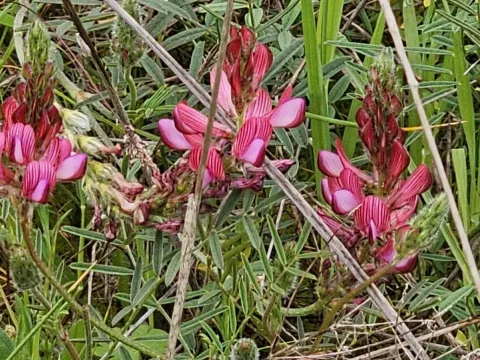
The crop acts as a powerful pollinator magnet. Its high nectar production attracts honeybees and wild pollinators, which significantly increases the seed set and overall farm biodiversity, adding value to the surrounding ecosystem.
Fusarium wilt is one of the most common fungal pathogens affecting sainfoin, particularly in fields with poor drainage. It targets the root system, causing yellowing, wilting, and eventually the death of the plants.
The sainfoin seed chalcid is a specialized pest that can significantly reduce seed yields. These insects lay eggs inside the developing pods, and the larvae consume the seeds, making early detection and targeted monitoring essential for seed producers.
Leaf-feeding insects, such as weevils, can cause noticeable damage to the canopy. While healthy stands can often withstand moderate pressure, large populations require integrated pest management strategies to maintain optimal biomass production.
Powdery mildew may occur during periods of high humidity and moderate temperatures. This disease covers leaves in a white, dusty layer, potentially reducing the nutritional quality and photosynthesis of the plant foliage.
To minimize disease pressure, farmers should avoid planting sainfoin on the same field more than once every five years. Maintaining spatial distance between older and newly planted stands also helps in preventing the spread of common soil-borne pathogens.
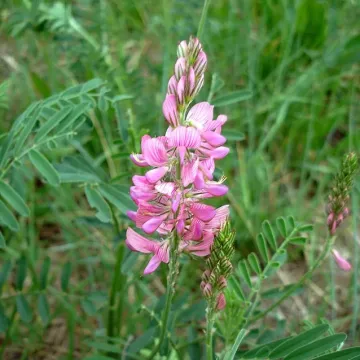
The ideal time for hay harvest is at the start of the flowering stage. At this phenological stage, the plant balances the highest concentration of protein and digestibility with the bulk of its biomass, ensuring top-tier nutritional quality.
When harvesting for seeds, farmers must wait until the pods have turned brownish on the main stem. Careful timing is critical because over-mature pods can easily shatter and scatter seeds, leading to substantial yield losses during collection.
A two-stage harvest method is frequently used for seed crops to ensure uniform maturity. By swathing the crop first and letting it dry in the field, producers can minimize the moisture content and prepare for efficient threshing.
Cutting height should be maintained at roughly 7–10 cm above the soil surface. This protects the crown of the plant and the regenerative buds, which are vital for the rapid regrowth of the next cutting or the autumn recovery phase.
Once harvested, seeds must be cleaned and stored in dry, cool conditions to maintain viability. Proper moisture management (12-14%) is the key to preventing mold and keeping the seed quality high until the next planting season arrives.