
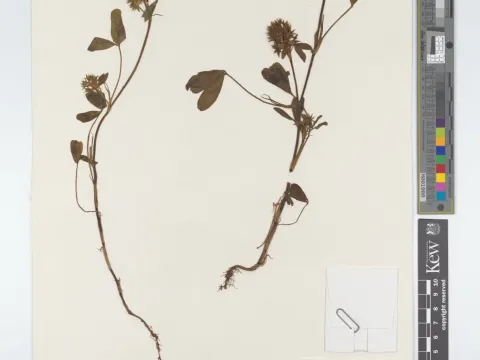
Dark clover
Trifolium obscurum
Dark clover (Trifolium obscurum) belongs to the Fabaceae family. It is a perennial herbaceous plant, most often found in natural phytocenoses, though it possesses potential for inclusion in forage crop rotations as a valuable component of pasture mixtures.
What the section contains
Dark clover
The optimal sowing time for this crop is early spring, as soon as the soil warms up to 5-8 degrees Celsius. Early sowing allows plants to efficiently use the soil moisture reserves for developing a robust root system before the onset of summer drought.
Late autumn sowing is also possible in regions with a mild climate, allowing seeds to undergo natural stratification. This contributes to more uniform and vigorous emergence during the spring period.
The seeding rate is calculated based on seed purity and germination, averaging 12-16 kg per hectare for pure stands. When creating grass mixtures, the rate is reduced according to the component's share in the mixture.
To improve seed-to-soil contact, rolling the fields immediately after sowing is a mandatory step. The seeding depth should be no more than 1-2 cm, depending on the soil texture and mechanical composition.
Dark clover prefers moderately moist, loamy, or sandy-loam soils with a neutral or slightly acidic pH. It demonstrates high adaptability to various growing conditions but is most productive on fertile sites.
The plant is light-loving; therefore, sowing under the cover of tall crops is not recommended, as it can cause suppression of seedlings in the initial growth phase. Good lighting is critical for the development of generative organs.
The crop is quite winter-hardy, allowing it to be successfully grown in regions with a temperate climate. It can tolerate short-term waterlogging; however, stagnant water in fields during spring can lead to the rotting of the root crown.
Agronomic requirements include regular inter-row cultivation during the first year of growth to control weeds. In subsequent years, clover forms a dense stand capable of suppressing most weed species on its own.
Application of phosphorus-potassium fertilizers helps increase winter hardiness and productivity of dark clover. Nitrogen fertilization is generally unnecessary as the plant forms a symbiosis with nitrogen-fixing bacteria.
The yield of dark clover green mass depends on the intensity of use and soil fertility levels. Under favorable conditions, the plant provides two full harvests per growing season, ensuring a high concentration of protein in the fodder.
The first harvest is recommended during the budding to early flowering phase, when nutrient concentration in the vegetative mass is at its peak. Delaying the harvest leads to decreased feed quality due to stem lignification.
The second harvest is conducted 40-50 days after the first, allowing plants to recover and accumulate sufficient plastic substances for successful overwintering.
In pasture mixtures, yield is determined by species diversity and grazing intensity. Dark clover tolerates moderate grazing well, regenerating quickly after each use cycle.
Total productivity can reach 15-20 tons of green mass per hectare when following management guidelines. The crop is valued for its high regrowth potential and longevity in cultivated meadows.
The main diseases affecting dark clover are anthracnose and powdery mildew, which manifest under conditions of excessive humidity and dense stands. Crop rotation and maintaining optimal plant density are used for control.
Among pests, weevils are the most dangerous, as they damage buds and foliage. Clover seed chalcids can also cause significant damage, reducing the productivity of seed production plots.
Pest prevention includes timely mowing of field edges, where pest populations often reside. Chemical plant protection measures are applied only when economic injury thresholds are reached.
Maintaining spatial isolation between stands of different ages reduces the likelihood of pathogen and insect spread. Healthy, treated seed material is the foundation for clean crops.
An important risk reduction factor is preventing excessive soil compaction, which supports the plant's natural immunity and contributes to healthy root system development.
Seed harvesting is conducted when 70-80% of the flower heads turn brown. This process requires caution to avoid excessive seed shattering, as the seeds are known for high viability.
For seed production, a two-phase harvesting method is often used: mowing into swaths for drying, followed by combine threshing. This minimizes losses and improves seed stock quality.
When harvesting for green mass, disc mowers with conditioners are used to accelerate drying and help preserve nutrients. The optimal cutting height is 5-7 cm above the soil surface.
Harvested crops require immediate processing, such as ensiling or drying into hay. Hay moisture during storage should not exceed 17% to prevent self-heating and spoilage of the valuable protein product.
Harvesting operations should be completed before widespread lodging occurs, which is especially important in high-humidity conditions. A correct work schedule ensures stable forage volumes every year.