
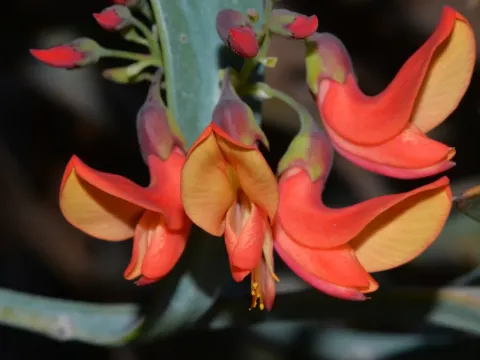
Daviesia
Daviesia
Daviesia belongs to the genus of evergreen shrubs in the Fabaceae family, native to Australia. In ornamental horticulture and cultivated collections, seeds are primarily sown in the spring when soil temperatures reach 18–20 degrees Celsius.
What the section contains


Daviesia
For successful germination, scarification of the seeds is recommended, as their hard seed coat hinders moisture absorption. Seeds should be sown in a light, well-drained substrate with a neutral to slightly acidic pH.
The optimal propagation method involves using nursery trays placed in bright greenhouses. Seedlings typically emerge 3–5 weeks after sowing, provided that humidity levels are kept stable.
It is important to minimize root system disturbance during transplanting; therefore, biodegradable peat pots are preferred. This allows young plants to be moved into open ground without disturbing the root ball.
Transplanting to a permanent location should occur after all risks of frost have passed. Space individual plants at least 1–1.5 meters apart to ensure proper crown development and airflow.
Daviesia is a light-loving plant that requires maximum sun exposure for optimal flowering. In shaded conditions, stems tend to become leggy, and flower production is significantly reduced.
The culture is relatively undemanding regarding soil composition, provided the soil is well-aerated, sandy, or rocky, ensuring excellent drainage. Waterlogging is lethal to the plant's root system.
The plant is highly tolerant of drought, an evolutionary adaptation to the Australian climate. In temperate zones, moderate watering is required, especially during the shrub's establishment phase.
Daviesia struggles in heavy, clay-based soils prone to water retention. When planting in such areas, it is essential to install a robust drainage layer composed of gravel or crushed brick.
Most Daviesia species have limited frost tolerance, so in regions with cold winters, they are typically grown in greenhouses or as container plants that can be moved indoors during the winter season.
The primary threats to Daviesia health include fungal diseases caused by excessive soil moisture and poor air circulation within the canopy. Root rot is the most common issue, often leading to rapid wilting.
Pests such as aphids and spider mites are major concerns, targeting young shoots and leaves. Their spread is often facilitated by dry air in indoor environments or greenhouses.
Mealybugs may infest leaf axils, sapping the plant's vitality and hindering growth. Regular monitoring and the application of systemic insecticides allow for the containment of infestations at early stages.
Disease prevention relies on strict irrigation management and ensuring high-quality airflow around the bush. Avoid over-fertilizing with nitrogen, as this produces soft tissue that is more susceptible to pest attack.
In cases of severe pest infestation, the use of oil-based insecticidal soaps or biological control agents is recommended to manage the population while maintaining environmental safety.