
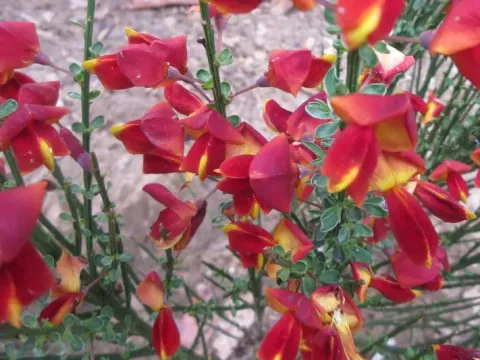
Dallimore's Broom
Cytisus dallimorei
Dallimore's Broom (Cytisus dallimorei) is a deciduous flowering hybrid belonging to the Fabaceae family. This shrub is highly prized in ornamental horticulture for its profuse, vibrant purple-pink blooms that cover the stems in late spring and early summer.
What the section contains
Dallimore's Broom
The plant thrives in full sun, which is essential for healthy development and high flower density. It is highly adaptable to poor soil conditions, preferring sandy, well-draining substrates where other plants might struggle, making it an excellent choice for rock gardens.
Adequate drainage is the most critical factor for successful growth. The root system of Cytisus dallimorei is susceptible to rot if soil moisture remains consistently high, so planting on slightly raised beds or slopes is often recommended.
Cultural maintenance involves light pruning immediately after the flowering cycle finishes. This practice prevents the plant from becoming leggy and promotes a denser branching habit, ensuring a more spectacular visual display in the following year.
While the plant is somewhat drought-tolerant once established, it requires regular monitoring during the first few months after planting. It is not suitable for areas with prolonged, extremely cold winters without significant winter protection.
Fungal issues such as powdery mildew are the most common health problems, particularly in regions with high humidity or poor airflow. Infected plants may show white powdery patches on foliage, which hinders photosynthesis and overall plant vigor.
Insect pests, including broom aphids and certain types of caterpillars, can cause significant damage to succulent young shoots. These pests can cause leaf curling and stunt growth, potentially leading to a decrease in overall flower production.
Integrated pest management strategies are advised, starting with physical removal of heavily infested branches and moving to targeted chemical treatments when necessary. Good hygiene, such as removing fallen leaves in autumn, reduces the risk of fungal spores.
To ensure long-term plant health, maintain a moderate distance between shrubs to facilitate air movement. Proper plant spacing acts as a natural preventative measure against the rapid spread of diseases within the landscape design.
In cases of severe soil moisture issues, root rot can develop, which is often fatal. Ensuring the soil structure remains loose and aerated through periodic light cultivation of the top layer can help prevent these detrimental anaerobic conditions.