
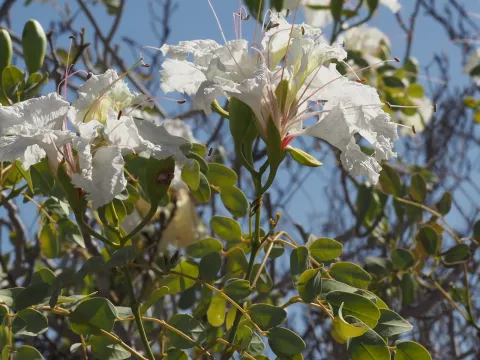
Delonix pumila
Delonix pumila
Delonix pumila is a distinct species within the Fabaceae family, recognized as a rare succulent tree. Unlike the taller members of the genus, this plant is valued for its compact, caudex-forming structure, which stores water for survival in arid environments.
What the section contains
Delonix pumila
Native to Madagascar, the plant thrives in tropical regions characterized by distinct dry seasons and rocky or well-draining soils. Its natural habitat dictates the strict cultural requirements needed to keep it healthy in an ornamental setting.
The primary environmental demand is intense sunlight. Without sufficient exposure, the plant loses its natural, sturdy morphology and becomes prone to etiolation, which significantly weakens its structural integrity.
Regarding soil, a mineral-heavy, porous mix is essential. The substrate must ensure rapid water drainage to simulate the dry-land conditions the species is adapted to. A stagnant, moisture-retentive soil is usually fatal to this plant.
Temperature management is critical; Delonix pumila is highly intolerant of frost. It requires warm conditions during the growing season and prefers a dry rest period during cooler months, which helps trigger its natural biological cycles.
The most significant threat to the health of Delonix pumila is root rot. This condition is almost always the result of overwatering or using a medium that lacks proper drainage, leading to oxygen deprivation in the root system.
Pest issues often include the common mealybug, which tends to congregate in the branch axils and under the leaves. Spider mites may also appear if the air is kept too dry and stagnant for extended periods.
Maintenance of the plant should include regular inspections of the stems and leaves. Early detection is crucial, as the succulent tissues can rapidly decay if infested by insects or infected by fungi.
Fungal infections on the bark can occur if the humidity is too high. Improving ventilation and maintaining a dry surface around the base of the plant are effective strategies for disease prevention.
When pests are detected, the use of contact or systemic insecticides is recommended. Always ensure that the chemical agent is compatible with succulent species to avoid phytotoxic damage to the delicate skin of the plant.