
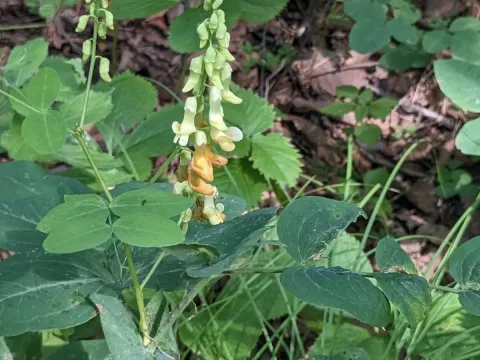
David's Pea
Lathyrus davidii
Sowing of David's Pea (Lathyrus davidii) is recommended in early spring, as soon as the soil is physically ready and reaches a temperature of 5–8 degrees Celsius. Early planting allows the crop to effectively utilize soil moisture stored after snowmelt, which is vital for seed germination and root system development.
What the section contains
David's Pea
Standard row planting is the preferred method, with inter-row spacing ranging from 15 to 30 centimeters. The seeding depth typically varies between 3 and 5 centimeters depending on soil texture. In lighter, sandy soils, slightly deeper sowing protects seeds from rapid surface dehydration.
A crucial preparatory step involves cleaning seeds from impurities and testing for germination vigor. Utilizing certified local seed varieties ensures uniform emergence, which is a fundamental prerequisite for achieving high biomass productivity throughout the growing season.
Seeding rates are calculated based on the intended use and local soil conditions, typically averaging 120–150 kilograms per hectare. A proper planting density is essential to suppress weed competition during the early growth stages of the crop.
Post-sowing rolling of the field is highly advised to ensure firm seed-to-soil contact, facilitating capillary moisture rise. This is particularly important for legumes, as consistent hydration at the start of vegetation is necessary for the proper development of symbiotic nitrogen-fixing apparatus.
David's Pea is a perennial herbaceous plant belonging to the Fabaceae family, noted for its ecological plasticity regarding temperature. It is capable of withstanding moderate spring frosts, making it a viable candidate for agricultural regions with unpredictable climatic conditions.
While the plant has moderate soil fertility requirements, it thrives best in structured, well-aerated loamy and sandy-loam soils. It is not suitable for acidic or waterlogged environments, where the root system may suffer from oxygen deficiency and poor microbial activity.
Sufficient sunlight is necessary for optimal crop development. Shade exposure often leads to stunted growth, reduced flowering intensity, and a decrease in overall dry matter, negatively impacting the forage value of the harvest.
A neutral or slightly acidic soil pH is essential for success. If liming is required for acidic soils, this process should be carried out well in advance of basic fertilization to provide a stable environment for beneficial nodule bacteria.
The crop responds well to phosphorus and potassium fertilizers, which strengthen the plant's immune system and increase overall frost resistance. Nitrogen applications are kept to a minimum in the early stages, as the plant can independently fix nitrogen from the atmosphere.
The productivity of David's Pea depends heavily on the growth phase during harvest. The maximum yield of high-quality nutritional mass is typically achieved at the onset of flowering, when the plants contain the highest concentration of protein and essential micronutrients for livestock.
In favorable years, green mass yields can reach significant levels, providing a stable forage supply. Utilizing intensive farming technologies, including timely top-dressing, can increase dry matter output per unit area by 15–20 percent.
For seed production, it is crucial to monitor the pod ripening process closely, as the pods are prone to shattering if left too long. Harvesting should begin when the lower third of the pods turn brown to minimize losses and maintain seed quality.
Agronomists highlight that incorporating David's Pea into forage mixtures with cereal crops improves both the total volume and the nutritional balance of the harvest. Legumes provide high protein content, while cereals add carbohydrates, creating an ideal ration for ruminants.
Harvested material requires immediate post-harvest processing, especially in high-humidity conditions. Proper drying and moisture content management are mandatory to prevent spoilage and fungal growth during storage.
Root rots are among the most common diseases for this species, often triggered by excessive soil moisture. These pathogens attack the root neck, leading to wilting and the death of young seedlings, which significantly reduces the final plant stand density.
Among pests, the clover root curculio poses a serious threat, attacking seedlings during the initial vegetation period. Adult insects feed on leaf edges, while larvae destroy root nodules, depriving the plant of its capacity for nitrogen fixation.
Aphids can also cause damage by sucking sap from young shoots and inflorescences, thereby slowing plant growth and reducing reproductive capacity. During hot, dry spells, pest populations may spike, necessitating close monitoring and immediate protective action.
Effective disease prevention begins with strict crop rotation. It is not recommended to plant legumes in the same field more than once every 3–4 years, as this leads to the buildup of soil-borne pathogens and specialized pests adapted to this family.
In cases of massive pest outbreaks or early signs of epiphytotics, registered insecticides and fungicides should be employed. Chemical protection measures must strictly adhere to regulations to avoid contaminating animal feed with toxic residues.
Harvest timing for David's Pea depends on the end goal: hay, haylage, or seed production. For forage, cutting should occur during the budding phase to ensure the plant is at its peak nutritional value and digestibility for livestock.
When producing hay, rapid drying is essential to retain green leaf color and prevent the loss of nutrients. Modern mower-conditioners are often used to accelerate stem moisture evaporation, which is crucial for high-quality forage production.
Seed harvesting requires rigorous technological discipline. A two-stage process is commonly used: swathing followed by threshing once pods have thoroughly dried. This method reduces losses from pod shattering and ensures seed purity for the next planting season.
Weather conditions play a decisive role in harvesting efficiency. It is advisable to schedule operations during dry windows to minimize biomass loss and prevent mold. In rainy autumns, seed harvesting may be delayed, which complicates farm logistics.
Post-harvest conditioning includes cleaning with grain cleaning machinery and drying the seeds to a moisture level of 14–15 percent. Proper storage in well-ventilated facilities guarantees that seed viability and forage quality remain intact throughout the winter months.