
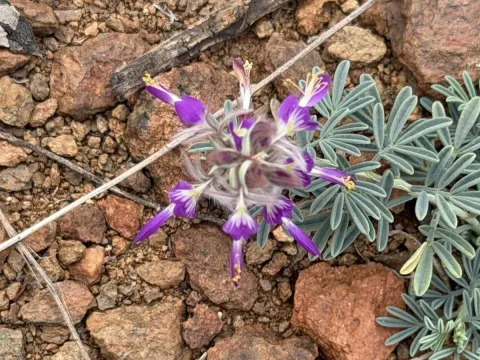
Dalea pogonathera
Dalea pogonathera
Dalea pogonathera, a member of the Fabaceae family, is a perennial plant well-adapted to arid environments. Seeds typically germinate during the spring when temperatures are consistently warm and the risk of frost has passed.
What the section contains
Dalea pogonathera
Successful establishment requires scarification of the seeds prior to planting. The hard seed coat acts as a mechanism for dormancy, which must be overcome to ensure uniform field germination.
Planting depth should be kept shallow, between 1 and 2 centimeters. Utilizing a wide-row planting method is recommended to provide sufficient space for young seedlings to develop without intense competition.
The soil temperature should reach at least 15-18 degrees Celsius for optimal growth. Providing adequate soil moisture during the initial weeks is critical for the establishment of the deep taproot system.
In arid regions, early spring sowing is prioritized to capitalize on moisture reserves remaining from winter precipitation, ensuring the plant matures before the peak heat of summer.
This crop is highly valued for its extreme drought tolerance and its ability to thrive in nutrient-poor, sandy, or rocky soils, making it an excellent candidate for land reclamation projects.
Dalea pogonathera requires well-draining soil conditions. It is highly intolerant of waterlogging, so sites with high water tables or poor drainage should be strictly avoided for cultivation.
As a sun-loving plant, it must be grown in open areas with full sun exposure. It performs poorly in shaded environments, and overcrowding can lead to significant reductions in overall biomass production.
The plant thrives in soils with neutral to slightly alkaline pH levels. This chemical environment supports the symbiotic nitrogen-fixing bacteria residing in the root nodules, essential for plant nutrition.
The species is genetically adapted to the wide temperature fluctuations of desert and steppe climates, allowing it to persist in environments where other traditional forage crops would fail.
Dalea pogonathera exhibits significant natural resistance to various plant pathogens. This resilience is largely attributed to the presence of specialized chemical compounds within its leaves and stems.
Root rot is the primary threat to the crop, but it almost exclusively occurs due to improper soil management or excessive irrigation practices that lead to water-saturated conditions.
Insect damage is generally minimal and rarely reaches an economic threshold. While leaf-feeding insects may be observed periodically, the plant demonstrates a robust capacity for vegetative recovery.
Weed management should focus on the early stages of plant growth. Mechanical cultivation between rows is safer than chemical control, as the crop is sensitive to many standard herbicide formulations.
The best strategy for preventing disease involves crop rotation and maintaining adequate spacing. Proper ventilation through the stand helps lower relative humidity near the soil surface, preventing fungal outbreaks.