
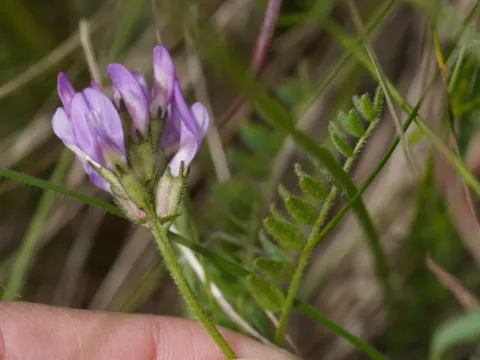
Danish milkvetch
Astragalus danicus
Danish milkvetch (Astragalus danicus) is a perennial legume species belonging to the Fabaceae family, recognized for its adaptability to diverse temperate environments.
What the section contains
Danish milkvetch
The optimal sowing time is during the early spring when the soil temperature reaches a minimum of 5–8 degrees Celsius, ensuring favorable germination conditions.
Seeds of Astragalus danicus have a hard coat; therefore, mechanical or chemical scarification is recommended prior to sowing to improve germination rates and uniformity.
The seeding rate typically ranges from 10 to 15 kg/ha, depending on whether the primary goal is biomass production or seed propagation for future plantings.
It is crucial to sow at a shallow depth, ideally between 1.5 and 2.5 cm, followed by firm rolling to ensure sufficient soil-to-seed contact for water uptake.
This species thrives in sunny, open habitats and exhibits remarkable winter hardiness, allowing it to be cultivated effectively in various geographical regions.
It prefers well-drained, lime-rich loam or sandy-loam soils, as the plant is highly sensitive to waterlogged conditions that can cause crown and root rot.
Danish milkvetch is valuable in sustainable agricultural systems because it forms symbiotic relationships with nitrogen-fixing bacteria, naturally enhancing soil fertility.
Low to moderate levels of phosphorus and potassium fertilizer applications are generally sufficient to maintain healthy growth and long-term stand persistence.
Proper field management should include regular monitoring to avoid competition from aggressive weeds, especially during the establishment year of the stand.
The primary agricultural use of Danish milkvetch is as a high-quality forage crop, as it provides excellent levels of protein and essential amino acids for livestock.
The crop produces consistent biomass yields, often reaching 10–18 tons per hectare when managed as part of a well-maintained perennial meadow or pasture system.
Harvesting at the early flowering stage is critical to maximize both the nutritional quality of the forage and the regrowth capacity of the perennial stand.
In addition to livestock fodder, the plant is highly regarded as a significant honey source, attracting pollinators and supporting biodiversity within the local ecosystem.
The extensive root system of this species also serves as a soil stabilizer, making it a useful candidate for preventing erosion on marginal or sloped agricultural lands.
The most common disease threats include fungal infections such as powdery mildew and rust, which are often encouraged by high humidity and poor air circulation.
Pest populations, including root-feeding weevils and aphids, can significantly impact yield if not managed through proper crop rotation and integrated pest management.
Root rot, induced by persistent soil moisture or lack of proper drainage, remains a primary cause of stand depletion over several years of production.
- Maintain proper spacing to ensure good airflow between plants.
- Implement strict crop rotation schedules to break the cycle of legume-specific pests.
- Choose certified, high-quality seed lots to minimize the introduction of soil-borne pathogens.
Chemical control should be treated as a last resort, with focus instead on building soil health and selecting resistant genotypes to ensure long-term field stability.