
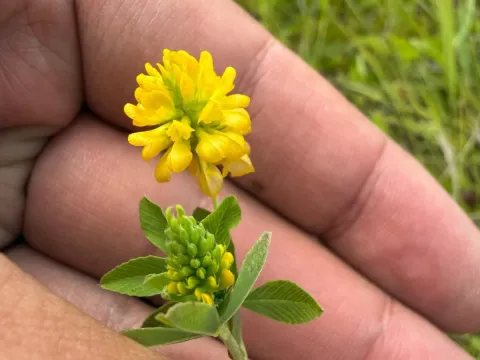
Golden clover
Trifolium aureum
Golden clover (Trifolium aureum) is an annual herbaceous plant belonging to the Fabaceae family. Sowing is typically performed in early spring as soon as the soil warms up to 5-8 degrees Celsius to ensure robust germination.
What the section contains
Golden clover
Seeds should be sown at a shallow depth of 1-2 centimeters. Achieving good contact between the seed and the soil is essential, so light rolling after planting is recommended to optimize moisture retention.
This crop exhibits rapid early growth, providing a competitive advantage against weeds in the early stages of development. The standard seeding rate is typically between 8 and 12 kilograms per hectare.
In regions with mild winters, autumn sowing may be viable, though spring planting remains the most reliable method for achieving consistent yields of high-quality green mass.
Proper crop rotation with Golden clover is highly beneficial, as the plant acts as an efficient nitrogen fixer, naturally enhancing soil fertility for subsequent seasonal crops.
The plant thrives in moderately moist, loamy, or sandy soils with a neutral or slightly acidic pH. It requires plenty of sunlight and is not suitable for cultivation in heavily shaded areas.
While Golden clover possesses moderate drought tolerance, it requires adequate rainfall during the budding phase to maximize growth. Waterlogging must be avoided, as the root system is sensitive to poor drainage.
Optimal development depends on sufficient phosphorus and potassium levels in the soil. Targeted fertilization during the early vegetative stage can significantly boost the overall productivity of the green biomass.
The ideal temperature range for growth is between 18 and 22 degrees Celsius. The crop is generally resilient to mild temperature fluctuations, making it adaptable to various temperate environments.
Its ability to form symbiotic relationships with nitrogen-fixing bacteria makes it an excellent choice for sustainable agricultural practices aimed at improving soil structure and nutrient content.
The yield of Golden clover is influenced by agronomic management and seasonal weather conditions. Under favorable circumstances, the crop provides a substantial amount of forage.
Implementing intensive cultivation techniques, such as foliar nutrition and effective weed control, can increase yields by 20-30 percent. The plant is prized for its high protein content.
As a green manure crop, it significantly enriches the topsoil with organic matter and biological nitrogen, which is crucial for maintaining long-term land productivity.
Seed harvesting requires careful timing, as the seeds are prone to shattering if left on the field for too long. Optimal harvesting should take place when the seed heads turn brown.
Average yields of green mass range from 15 to 25 tons per hectare, depending on soil fertility and the level of agricultural intervention applied throughout the growing season.
The main threats to Golden clover include fungal diseases like powdery mildew and leaf spot, which are often exacerbated by high humidity levels and high planting density.
Pests such as clover weevils and aphids can cause significant damage by feeding on young shoots and buds, ultimately reducing the plant's vigor and total biomass yield.
Preventative measures, including the use of certified, treated seeds and strict adherence to crop rotation cycles, are essential for managing disease risks effectively.
In cases of severe pest infestation, the application of approved insecticides specific to legumes is necessary, with strict adherence to safety waiting periods before harvest.
Effective weed management during the emergence phase is critical, as early competition can lead to sparse stands and poor overall establishment of the crop.
For forage purposes, the crop should be harvested at the beginning of the flowering phase. This is when the plant's nutritional profile, particularly its protein content, is at its peak.
Seed harvesting is typically performed via direct combining. It is best to work in early morning or late evening hours to minimize losses caused by shattering due to excessive heat.
Prompt transport and processing of the cut biomass are necessary to prevent self-heating and nutrient loss, ensuring that the final hay or silage retains its high quality.
When used as a green manure, the clover should be incorporated into the soil during peak flowering to facilitate rapid decomposition and maximize the return of nutrients to the earth.
Organizing the harvest efficiently allows farmers to capitalize on the crop's productive potential while preparing the soil structure for the next cycle of agricultural activity.