
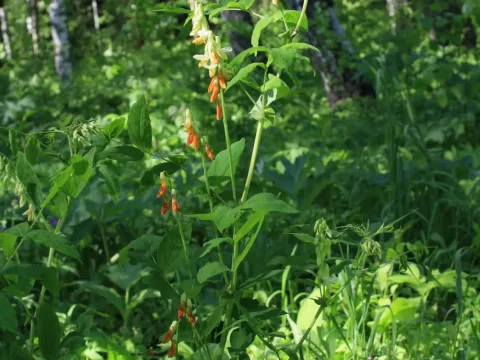
Gmelin's pea
Lathyrus gmelinii
Gmelin's pea is usually sown in the early spring once the soil temperature is stable enough to support germination and initial root development.
What the section contains
Gmelin's pea
Seed treatment, such as scarification, is highly recommended to improve water absorption and ensure faster, more uniform seedling emergence.
The optimal sowing depth ranges between 2 to 4 centimeters, depending on the moisture level of the seedbed and soil compaction factors.
Row spacing should be carefully calculated to allow for sufficient airflow and light penetration, which helps in preventing fungal infections later.
Rolling the soil after sowing improves soil-to-seed contact, which is essential for successfully establishing the crop in field conditions.
The plant performs best in moderate climates with consistent moisture availability throughout the growing season, showing good resistance to cool weather.
Fertile, well-drained loamy soils are ideal, providing the necessary nutrients and physical structure for the development of the perennial root system.
Gmelin's pea is sensitive to waterlogging, so it is crucial to avoid planting in low-lying areas where water might accumulate after rainfall.
Sunlight is vital for this crop; therefore, it should be grown in open fields away from tree lines or other structures that cast significant shade.
Soil pH should ideally be neutral or slightly acidic, as this supports the symbiotic activity of nitrogen-fixing bacteria on the plant's roots.
The biomass yield of Gmelin's pea depends largely on soil fertility and the frequency of mowing throughout the agricultural season in your region.
Application of phosphorus and potassium fertilizers can significantly boost the overall yield, improving both the green mass and the seed production.
Perennial nature allows for multiple harvests over several years, provided the plants are not overgrazed or harvested too close to the ground level.
Seed yield is optimized when plants are grown in well-tended plots with proper weed management, allowing for maximum pod development per plant.
Consistent management practices lead to high-quality forage, which is rich in proteins and suitable for various types of livestock feeding programs.
Common pests include leaf-feeding beetles and weevils that can compromise the plant's growth vigor if populations are left unchecked during the season.
Powdery mildew is a prevalent fungal disease that typically appears during periods of high humidity and warm temperatures, damaging the leaves.
Root rot infections are a risk when the crop is grown on poorly drained soils or when the same field is used for too many years consecutively.
Effective management involves regular field scouting and the use of integrated pest management strategies to reduce the reliance on harsh chemicals.
Maintaining a balanced crop rotation schedule helps to break the life cycles of most soil-borne pathogens and insect pests affecting this legume.
For high-quality forage, the best time to harvest is during the early flowering phase, as this is when the nutrient concentration is at its peak.
Proper haymaking techniques, such as avoiding excessive agitation, are necessary to preserve the delicate leaves where most proteins are stored.
When harvesting for seeds, farmers must time the operation correctly to avoid pod shattering, which is a common issue as the crop reaches maturity.
Equipment should be set to a proper height to ensure that the regrowth of the perennial plant is not hindered after the first or second cut.
Post-harvest storage should be managed in dry, well-ventilated conditions to ensure that the seed quality remains high during the winter months.