
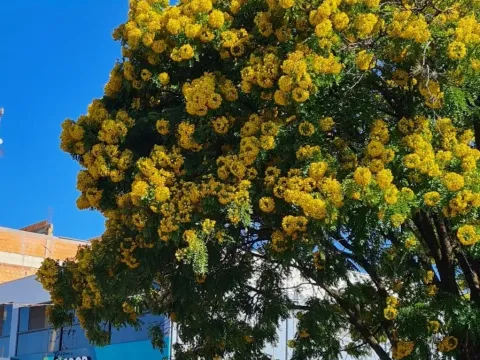
Gold medallion tree
Cassia leptophylla
Propagation of the Gold medallion tree is primarily achieved through seeds, which require scarification to break the dormancy of the hard outer coat.
What the section contains
Gold medallion tree
Sowing should take place in spring in a warm environment, ideally with temperatures ranging from 22 to 25 degrees Celsius for optimal germination.
Pre-soaking seeds in warm water for approximately 24 hours significantly improves the germination rate and ensures a more uniform emergence of seedlings.
Once seedlings have developed their first true leaves, they should be transplanted into individual pots to avoid root competition and promote vigorous growth.
Transplanting into the permanent outdoor location should only occur after the risk of frost has passed to prevent damage to the tender root system.
As a member of the Fabaceae family, Cassia leptophylla thrives in full sun exposure, which is essential for healthy branching and flower production.
The tree prefers well-drained, fertile soil, ideally with a neutral to slightly acidic pH, to support its nutrient uptake and root development.
While the Gold medallion tree exhibits strong drought tolerance once established, it benefits from regular irrigation during prolonged dry spells.
Protection from high winds is highly recommended, as the delicate, fern-like foliage is prone to physical damage in exposed, windy conditions.
Climate requirements include warm, frost-free winters, although mature specimens can tolerate brief periods of cool weather in certain environments.
The primary use of the Gold medallion tree is ornamental, prized for its spectacular display of golden-yellow flowers that bloom in clusters.
It is frequently utilized in urban planning for landscaping boulevards and parks, providing both shade and significant aesthetic appeal during the flowering season.
Similar to other legumes, this tree improves soil quality through nitrogen fixation, assisting in the ecological restoration of degraded planting sites.
The timber, while not utilized commercially, is recognized for its density, but the plant remains valued mostly for its botanical and landscaping contributions.
Performance in a landscape is measured by the canopy density and the profusion of floral blooms, which are indicators of successful site selection and management.
Common pests include spider mites and scale insects, which can become problematic during hot, arid periods if the tree is not properly hydrated.
Root rot is a significant threat to the health of the tree, typically caused by poor soil drainage or excessive irrigation in heavy clay soils.
Fungal leaf spot can develop in humid conditions with poor air circulation, requiring careful pruning to maintain an open canopy structure.
Integrated pest management, including regular visual inspections of the foliage, is crucial to catch infestations early before they spread across the tree.
Maintaining proper sanitation by removing dead or diseased leaves helps minimize the risk of pathogen buildup within the immediate environment of the tree.