
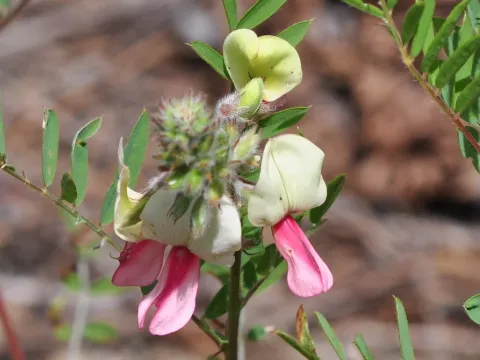
Goat's rue (Tephrosia virginiana)
Tephrosia virginiana
Tephrosia virginiana is a perennial herbaceous legume, so sowing is typically planned for the spring season once the soil has sufficiently warmed up. Seeds require pre-sowing treatments like scarification to enhance germination rates because of their naturally hard seed coats.
What the section contains
Goat's rue (Tephrosia virginiana)
The optimal sowing depth is 1.5 to 2 centimeters. Ensuring proper soil-to-seed contact is crucial for stimulating initial growth. It is recommended to sow in rows with spacing of up to 45 cm to allow the root system to establish itself properly during the first few years.
During the first year, the crop develops slowly, focusing on its deep taproot, so keeping the area free of weeds is vital for plant survival. Fall sowing is only viable in southern regions with mild winters, as seedlings are susceptible to hard frosts.
Seeding rates should be adjusted based on local conditions, seed purity, and germination energy. Utilizing high-quality seeds ensures a balanced plant density across the field, which is essential for uniform crop development.
In subsequent years, the plant spreads more actively, forming dense bushes. Field maintenance in later years is limited to occasional inter-row cultivation, as the plant becomes highly competitive against weeds once established.
This legume species thrives in dry, well-drained sandy or sandy-loam soils. It is exceptionally well-adapted to nutrient-poor soils where other legumes struggle, thanks to its symbiotic relationship with nitrogen-fixing bacteria.
The plant is photophilous and requires open areas with direct sunlight for full flowering and seed production. Tephrosia virginiana exhibits high drought resistance and can withstand long periods without rain due to its extensive taproot system.
The ideal soil pH is neutral or slightly acidic. Excessive soil moisture and waterlogging are fatal, as they trigger root rot and suppress the beneficial soil microbiome necessary for the plant's nutrient uptake.
Climatically, it performs best in regions with moderately warm summers. While it has moderate winter hardiness, young plants may require protection during severe, snowless winters to ensure survival.
The crop responds well to phosphorus and potassium fertilizers, though excessive nitrogen application should be avoided as it may promote vegetative growth at the expense of reproductive flower development.
The primary agricultural use of Tephrosia virginiana lies in its role as a soil-improving crop. It significantly enriches the soil with nitrogen, which increases the yield of subsequent crops in a standard agricultural rotation.
The biomass can be utilized as green manure. With proper management, the crop produces a consistent amount of organic matter that can be incorporated into the soil to improve fertility and soil structure.
Seed yield is moderate and depends heavily on the activity of pollinators. The flowers attract bumblebees and other insects, which are essential for successful cross-pollination and seed set.
Its deep root system accesses water and nutrients from lower soil horizons, making it an excellent candidate for biological remediation and erosion control on degraded lands.
Despite containing natural toxins like rotenone, the plant has a history of use in traditional medicine and as a natural insecticide, providing alternative value streams beyond its primary soil-improvement function.
Tephrosia virginiana is generally a resilient plant, yet it can be susceptible to root rot in high-humidity conditions. Prevention involves choosing well-drained planting sites and ensuring adequate spacing to maintain airflow.
Among pests, various species of weevils and cutworms pose the most significant threat, as they can damage foliage and buds during the growing season. Regular field monitoring is necessary to identify outbreaks early.
Aphids may occasionally appear on young shoots, though massive infestations are rare. Biological pest control methods are preferred to maintain the ecological balance and avoid damaging the beneficial pollinator population.
Powdery mildew can affect the leaves during seasons with high atmospheric humidity. Managing this fungus involves good agricultural practices, such as proper spacing and the prompt removal of affected plant debris.
Vigilance against parasitic weeds is essential to maintain the vitality of the planting. Consistent weeding and a strict crop rotation schedule help keep the field’s phytosanitary status in good condition.