
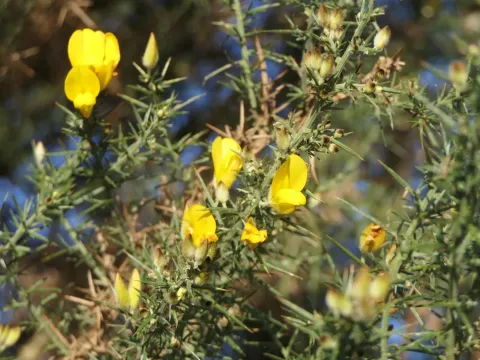
Gorse
Ulex L.
Gorse seeds are typically sown in the spring once the soil reaches a temperature of 10–12 degrees Celsius. The seeds have a hard seed coat and require scarification prior to planting to ensure uniform and rapid germination.
What the section contains

Gorse
For commercial forage production, seeds are sown in rows spaced 45–60 centimeters apart. The ideal sowing depth is 1.5–2 centimeters to ensure the seed is placed in contact with sufficient soil moisture for sprouting.
The plant grows slowly during its first year, focusing its energy on developing a robust root system. Keeping the plots free of weeds is crucial during this period as the seedlings are susceptible to competition.
The seeding rate ranges between 8 and 12 kilograms per hectare, depending on the quality of the seed lot. Proper plant density is essential for achieving a uniform canopy coverage by the second season.
While autumn sowing is possible in mild climates, spring remains the preferred time for planting in most regions. Early spring sowing provides the seedlings with enough time to establish before the onset of winter.
Gorse belongs to the Fabaceae family and is a spiny, evergreen shrub. It is highly photophilous and demands full sun exposure, failing to thrive under shade or in dense canopy conditions.
The crop prefers light, well-drained, sandy, or rocky soils with neutral to acidic pH levels. Waterlogging and poor drainage are detrimental to the root system and must be avoided for successful establishment.
Known for its exceptional drought tolerance, Gorse is well-adapted to harsh, arid conditions. Its leaves are modified into sharp spines, which significantly reduce transpiration rates during hot and dry weather.
The plant is moderately cold-hardy, although extreme winter temperatures can damage the upper branches. In colder regions, sites with good wind protection and reliable snow cover are recommended.
Gorse naturally enters into a symbiotic relationship with nitrogen-fixing bacteria, allowing it to flourish in nutrient-poor soils. While it has low fertility demands, supplemental phosphorus can aid initial establishment.
The biomass yield of Gorse depends on the age and vigor of the stand, with optimal production occurring from the third year onwards. The forage produced is a valuable source of protein for livestock.
Due to the sharp spines, the green biomass must be processed through crushing or milling before being fed to animals. Traditional methods involve steaming the crushed plant to increase digestibility and palatability.
Beyond forage, Gorse is utilized for windbreaks, hedging, and soil stabilization on slopes. Its deep root architecture is highly effective in preventing soil erosion in degraded agricultural landscapes.
The plant is recognized for its early-season nectar production, making it a critical asset for apiaries. It supports bee populations at a time when other floral resources are limited.
Harvesting is performed using mechanical harvesters that cut and crush the stems simultaneously. Timing the harvest before the stems become overly lignified is key to maintaining high feed quality.
Fungal diseases, such as various types of leaf spot and rust, are the primary health concerns for Gorse. These are exacerbated by high humidity and poor air circulation within the stand.
Insect pests, including weevils and spider mites, can damage the buds and shoots, hindering growth. Monitoring the population levels of these pests is an essential component of crop management.
Control strategies for pests include the application of systemic insecticides when necessary, provided they are cleared for use on livestock feed. Adhering to waiting periods after application is mandatory.
Preventive maintenance involves regular pruning of damaged branches and ensuring the stand is not overcrowded. This promotes airflow and reduces the micro-environmental moisture needed for fungal proliferation.
Given its rugged nature, Gorse is relatively resilient to many common pests. However, good agricultural hygiene remains the best defense against major outbreaks and ensures long-term productivity.