
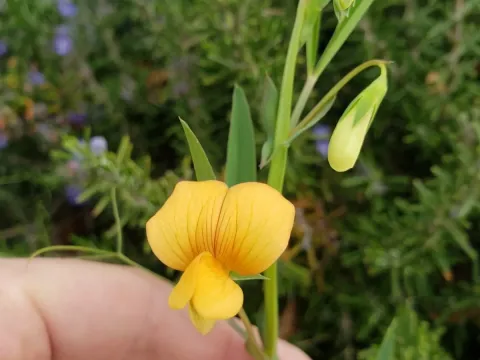
Gorgon vetch
Lathyrus gorgoni
Gorgon vetch is an annual herbaceous plant belonging to the legume family (Fabaceae), which is of interest as a forage and soil-improving crop. In temperate climates, sowing is carried out in early spring, as soon as the soil is physically ready for cultivation.
What the section contains
Gorgon vetch
The optimal sowing time depends on the region; however, the period from late March to mid-April is traditionally chosen. It is important to ensure the seeds are in contact with moist soil to promote uniform germination under spring warming conditions.
The seeding depth is 3–5 cm, depending on the soil texture and moisture content. The use of seed drills with press wheels significantly improves field emergence of the crop.
The seeding rate is calculated based on the intended use: lower for seed production and higher for green manure or forage. Row seeding with 15–20 cm spacing is the standard practice.
Adherence to sowing schedules allows the crop to establish a robust root system and sufficient vegetative mass before the onset of peak summer temperatures, which is critical for legume development.
The crop prefers well-drained soils with a neutral to slightly alkaline pH. It is quite demanding regarding the availability of phosphorus and potassium, which are essential for the formation of fully developed generative organs.
The plant has moderate drought tolerance, but for high forage yields, it requires sufficient moisture during the flowering phase. Waterlogging is detrimental to the root system and may lead to root rot.
Gorgon vetch is photophilous and does not tolerate shading by other tall plants. In crop rotation, it is best placed after small grain cereals, which do not deplete the soil with pathogens specific to legumes.
The optimal temperature range for active vegetative growth is 18–22 degrees Celsius. Significant temperature fluctuations in the early period of vegetation can slow down seedling development.
Mineral fertilization should be moderate, focusing on phosphorus-potassium compounds, as excessive soil nitrogen can lead to unnecessary stem growth at the expense of fruit production.
The yield of Gorgon vetch depends on the intensity of the agronomic practices and seasonal weather conditions. Under optimal moisture availability, the crop is capable of producing significant biomass suitable for high-protein hay.
Grain productivity varies greatly, but when cultivation technology is followed, the performance remains stable compared to other representatives of the Lathyrus genus. The seeds are characterized by a high protein and nutrient content.
To increase yield, it is important to manage weeds during the first month after sowing, before the plant creates enough cover to suppress competitors on its own.
Cultivation efficiency is measured by both dry matter output and seed quality. The plant is valued for its ability to enrich the soil with nitrogen, which increases the yield of subsequent crops in the rotation.
Maximum harvests are achieved on structured chernozem soils, provided early sowing and the absence of severe droughts during critical phases of plant development.
Typical threats to Gorgon vetch include fungal diseases such as root rot and powdery mildew, which occur under poor moisture management. Prevention is based on proper crop rotation.
Pests, such as pea leaf weevils, can damage young seedlings by feeding on the growth point and leaves. Timely monitoring of crop health allows for the effective use of insecticides at the start of an infestation.
Aphids can colonize the tender tips of plants during the flowering period, sucking sap and reducing overall productivity. In cases of mass outbreaks, specialized chemical control is required.
Seeds and seedlings can also be damaged by wireworms, which necessitates the seed treatment with protective compounds (fungicides and insecticides) in areas prone to soil-borne pest infestation.
- Compliance with quarantine measures when handling seed material.
- Regular phytosanitary inspections of the fields.
- Timely weed control, as weeds often act as reservoirs for infections.
Seed harvesting is conducted when 70–80% of the pods have matured, turned their characteristic color, and the seeds have become firm. It is important to avoid over-ripening to prevent pod shattering and crop loss.
When harvesting for green mass or hay, cutting should be performed at the beginning of the flowering phase. At this time, the nutrient content in the vegetative part reaches its peak, providing the best forage quality.
Direct or separate harvesting is used depending on weather conditions and field weediness. The separate method is often preferred for quality drying of the mown mass in swaths.
Post-harvest processing of seeds involves thorough cleaning and drying to a moisture content of 12–14%, which is necessary for long-term and safe storage.
Residues left after grain harvest can be used as organic fertilizer, as the root system of vetch enriches the soil with nitrogen-fixing bacteria.