


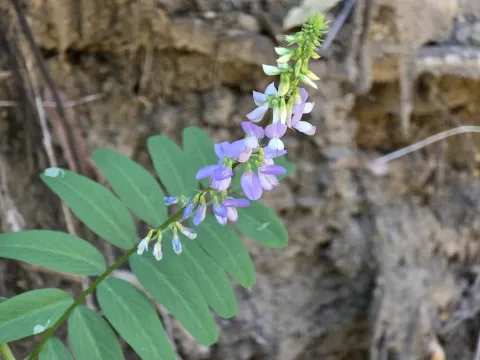
Reference · Crops
Goat's rue
Galega L.
The optimal time for sowing goat's rue is early spring as soon as the soil reaches physical maturity. This crop is highly moisture-demanding during the initial growth phase, so delaying sowing may result in topsoil dehydration and seedling failure.
2
items
What the section contains
Marketplace
Products in this section · 12


Goat's rue
In regions with sufficient rainfall, undersowing with annual grasses or cereal crops is permissible. However, it is critical to reduce the seeding rate of the cover crop to avoid suppressing the slow-growing goat's rue seedlings.
Before sowing, seeds must be scarified to damage the hard seed coat and accelerate germination. Additionally, inoculating seeds with specific nitrogen-fixing bacteria strains is an essential step for establishing a healthy, self-sustaining crop.
Sowing depth depends heavily on soil texture and compaction. On light sandy soils, seeds should be sown at a depth of 3–4 cm, whereas in heavier clay soils, planting depth should not exceed 2 cm.
Autumn sowing is conducted late in the season so that seeds undergo stratification without germinating before winter freeze. This practice often helps ensure more uniform emergence during the following spring.
Goat's rue, a member of the Fabaceae family, is a perennial herb with a robust root system. It exhibits high ecological plasticity but thrives best in fertile loamy soils with a neutral or slightly acidic pH level.
The crop is highly sensitive to groundwater levels. Waterlogging and prolonged flooding are unacceptable as the root system quickly rots when moisture excess is combined with poor soil aeration.
The plant possesses exceptional winter hardiness and can survive harsh, snowless winters. Unlike alfalfa, goat's rue begins vegetation very early, utilizing spring moisture reserves, which enables high green mass yields.
While goat's rue is moderately shade-tolerant, it is highly sensitive to weed competition during the first year of establishment. Thorough weed management is essential during this stage to ensure proper development.
Goat's rue is a long-lived plant capable of producing efficiently on the same site for 10–15 years. This longevity is due to its ability for active vegetative reproduction through rhizome development, which produces new shoots.
Green mass yield of goat's rue can reach 50–70 tons per hectare per season with proper management. When harvested for hay, dry matter yields typically range between 8–12 tons depending on the climatic zone.
The crop allows for two full cuts per year. The first cut should be performed during the budding stage when nutrient concentration is at its peak, and the second cut follows 40–50 days later.
Besides vegetative mass, goat's rue leaves behind a significant amount of organic matter in the soil. Its root system can accumulate up to 200 kg of nitrogen per hectare, significantly improving soil fertility for subsequent crops in the rotation.
Yield stability is maintained over many years due to the plant's ability to regrow rapidly. However, peak productivity is generally observed in the third and fourth years after the stand has fully developed.
For seed production, yields range from 300 to 600 kg per hectare. A critical condition for success is the presence of insect pollinators, as goat's rue is a cross-pollinating plant.
One of the most dangerous pests for goat's rue is the clover root curculio, which damages seedlings and reduces nitrogen-fixation intensity. Control is usually achieved through chemical treatment during early development stages.
During periods of high humidity, stands may be affected by Ascochyta blight and leaf spots. These fungal diseases reduce the quality of the green mass and can lead to premature leaf drop.
Root rots are a serious threat when the site has poor drainage. Prevention focuses on adhering to agrotechnical standards and selecting proper crop predecessors.
Seed-eating pests can significantly reduce the harvest of high-quality seeds. Insecticides are used during peak flowering to control these pests, though precautions must be taken to protect local bee populations.
- Infestation by leaf-eating insects
- Risk of fungal disease development
- Competition from rhizomatous weeds
Harvesting for green fodder or hay is recommended strictly during the budding or early flowering phase. This is when the plant contains the highest percentage of protein and minimum crude fiber, which is vital for livestock nutrition.
When producing hay, goat's rue requires a specific drying regime. Due to the high moisture content in the stems and dense foliage, the hay must be tedded frequently to prevent molding and nutrient loss.
For seed harvesting, two-stage combine harvesting is recommended. It is important to wait until the majority of pods turn brown while monitoring seed moisture, which must not exceed safety limits for long-term storage.
The cutting height should be at least 5–7 cm. Cutting too low can damage the renewal buds located in the crown, which will negatively impact regrowth and the overall longevity of the stand.
The harvested crop requires immediate primary processing or preservation. In wet weather, haylage or silage production using high-quality additives serves as an excellent alternative to dry hay.