
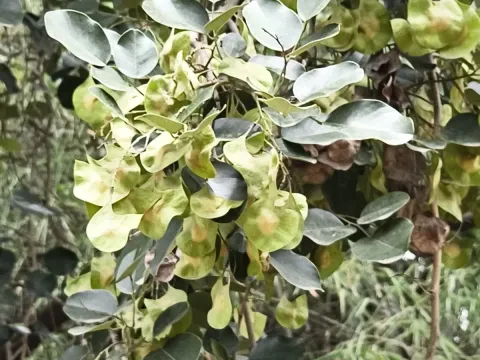
Pterocarpus marsupium
Pterocarpus marsupium
Propagation of Pterocarpus marsupium is primarily achieved through seeds collected from mature, brown pods. The pods are harvested once they have fully dried on the tree.
What the section contains
Pterocarpus marsupium
Seeds require mechanical or water-based pre-treatment to break dormancy and enhance germination rates. Sowing typically takes place at the onset of the monsoon season to utilize natural soil moisture.
In nursery conditions, seeds are planted in well-draining, lightweight soil mixtures at a shallow depth of approximately 1 to 2 centimeters to ensure successful emergence.
Seedlings are highly sensitive to extreme environmental conditions during their first months and require partial shade provided by nursery screens to prevent dehydration.
Transplanting into the field is scheduled for the following rainy season, once the saplings have developed a sturdy root system and reached a height of at least 30 centimeters.
This tree thrives in tropical and subtropical climates characterized by a distinct wet season. It is native to the deciduous forests of India, Sri Lanka, and Nepal.
The species prefers deep, well-draining loam or sandy loam soils. It is highly intolerant of waterlogged areas, which can lead to root system failure and stunted growth.
Pterocarpus marsupium requires ample sunlight once established but shows a preference for canopy shade during its early juvenile stage of development.
The ideal temperature range for active vegetative growth is between 20 and 35 degrees Celsius, as the plant cannot tolerate frost or temperatures below freezing.
In its natural habitat, it is frequently found on hilly terrain at elevations up to 1,200 meters, which provides the necessary slope for proper soil drainage.
The primary economic value of this tree lies in its highly durable, termite-resistant timber, which is extensively used in high-quality furniture making and structural applications.
The tree also yields 'Kino' or Malabar Kino, a resinous gum extracted from the bark. This product is highly valued in the pharmaceutical industry for its medicinal properties.
In industrial plantations, an optimal density of 400 to 600 trees per hectare is maintained to ensure balanced nutrient uptake and maximize biomass production.
Given the slow growth rate, commercial harvesting of timber typically occurs after 40 to 50 years, ensuring the heartwood is fully developed and dense.
Strategic management of plantation plots allows for a sustainable yield of both timber and medicinal resin throughout the tree's lifespan.
Fungal infections, particularly root rot and various stem decays, represent the most significant threat, especially if the plantation soil drainage is inadequate.
Defoliating insects can cause significant damage to young saplings, reducing their photosynthetic potential and overall vigor during critical growth years.
Wildlife, particularly grazing ungulates, can damage the bark of younger trees, creating entry points for opportunistic bacterial and viral infections.
To mitigate these threats, integrated pest management practices include regular site inspections and the removal of infected or compromised plant material.
Maintaining adequate spacing between trees is crucial to improve air circulation within the canopy and reduce the humidity levels that favor fungal development.
Timber harvesting is conducted using selective logging practices to minimize soil erosion and maintain the ecological integrity of the plantation site.
Resin collection involves precise V-shaped bark incisions. It is essential to perform these carefully to avoid damaging the cambium layer and ensure the tree remains healthy.
The gathered resin is manually processed to remove debris and impurities, resulting in a high-purity product ready for extraction and pharmaceutical processing.
Harvesting for lumber is optimally performed during the dry season, which ensures the wood moisture content is low, simplifying the subsequent kiln-drying process.
Sustainable harvesting techniques allow landowners to extract valuable medicinal gums for several decades while simultaneously allowing the tree to reach maturity for high-value timber production.