
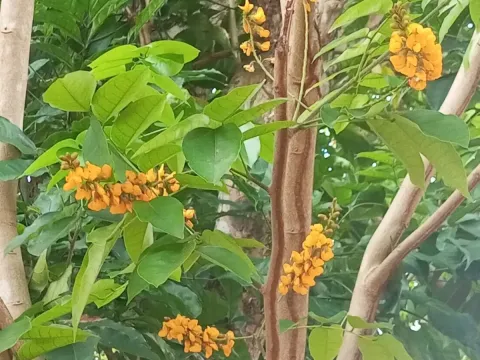
Pterocarpus santalinoides
Pterocarpus santalinoides
Pterocarpus santalinoides is typically propagated via seeds which require scarification to enhance germination rates before planting in specialized nurseries.
What the section contains
Pterocarpus santalinoides
Seeds should be sown at the onset of the rainy season to provide sufficient moisture for the initial establishment of the root system in the soil.
Containers or seedbeds should be filled with a well-draining, nutrient-rich substrate to support the rapid development of young seedlings during their first growth phase.
Spacing between trees must be significant, usually 5 to 7 meters, to accommodate the wide canopy and extensive root system as the plant matures over time.
As a member of the Fabaceae family, this species often participates in nitrogen fixation, which can naturally enrich the soil environment if managed properly.
This tropical tree thrives in hot, humid climates with high annual rainfall, making it unsuitable for regions with prolonged dry seasons or cold winters.
The plant prefers deep, fertile loamy soils and exhibits strong tolerance to seasonal waterlogging, often appearing naturally in riparian habitats near rivers.
High sunlight exposure is critical for optimal growth; however, young seedlings may benefit from temporary shade to protect them from excessive surface heat.
Soil pH should ideally be neutral to slightly acidic, ensuring that micro-nutrients remain bioavailable for the plant's sustained development.
Regular maintenance, including weeding around the base of the plant during the first two years, is essential to minimize competition for nutrients and water.
The primary yield from this crop is high-quality timber, known for its density and excellent resistance to wood-decaying organisms and environmental stressors.
Secondary outputs include pharmacological extracts derived from the bark and leaves, which are increasingly valued in local and international medicinal markets.
Biomass production from annual pruning provides organic matter that acts as green manure, enhancing the soil quality within the plantation area effectively.
The long-term yield of the tree is significant, providing sustainable economic returns for farmers once the stand reaches its technical maturity after two decades.
Sustainable harvesting methods ensure that the crop provides a continuous supply of resources without degrading the land or the long-term viability of the farm.
Fungal pathogens represent the most significant threat, particularly in poorly drained soils where water stagnation can trigger root rot and stem decay.
Insect pests, including various caterpillars and beetles, can cause localized damage to foliage, requiring integrated pest management strategies to control infestations.
Leaf spot diseases often occur in high-humidity environments with restricted air circulation, potentially reducing the overall vigor of the plantation trees.
Nematode infestations can be problematic in sandy soils, making it crucial to ensure that nursery stock is healthy and free from soil-borne pathogens before planting.
Proactive monitoring and the removal of infected plant materials are vital steps in maintaining the health and productivity of the Pterocarpus crop.
Timber harvesting is carried out through selective logging of mature trees, allowing for sustainable management and the preservation of younger, growing stock.
Proper tools and equipment must be used to minimize damage to the bark and surrounding trees during the extraction of logs from the plantation area.
Post-harvest processing involves immediate debarking and cleaning of stems to prevent fungal colonization and ensure the wood dries evenly without splitting.
Medicinal parts are harvested manually at specific times of the year to ensure the highest concentration of active compounds in the collected bark or leaves.
Adequate storage conditions are necessary for the harvested timber to undergo natural seasoning, which ensures the final product meets market quality standards.