
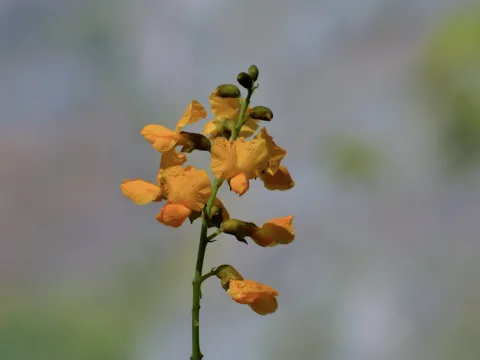
Pterocarpus acapulcensis
Pterocarpus acapulcensis
Pterocarpus acapulcensis is a tree species belonging to the legume family, Fabaceae. It is native to the tropical forests of Mexico and Central America, where it thrives in humid habitats.
What the section contains
Pterocarpus acapulcensis
The reproduction of this species in its natural environment relies on seed dispersal. Successful germination requires warm temperatures and consistently moist, well-draining soil conditions.
In nursery settings, seedlings often require partial shade during the initial months to protect them from intense direct sunlight while they establish their root systems.
For commercial propagation, seeds often undergo scarification to break their hard seed coat, which significantly increases the uniformity and speed of germination.
Transplanting to the field is most effective at the onset of the rainy season, allowing the trees to establish themselves without the need for intensive irrigation.
This species requires a tropical climate with no frost, as it is highly sensitive to cold temperatures, which can severely stunt or kill young specimens.
The trees perform best in well-drained, fertile soils, preferring neutral to slightly acidic pH levels found in typical forest environments.
While seedlings can tolerate some shade, mature trees require full sun to optimize their growth rates and ensure healthy canopy development.
Although it possesses moderate drought tolerance, adequate soil moisture is essential for rapid biomass accumulation and long-term tree health.
Protection from high winds is recommended, as the tree's structure can be prone to limb breakage if exposed to constant, strong gale-force winds.
Pterocarpus acapulcensis is primarily cultivated for its durable and high-quality timber, which is valued for carpentry and high-end furniture manufacturing.
The species is also highly beneficial in agroforestry systems due to its ability to fix nitrogen in the soil, which helps improve local soil fertility.
The yield of timber is dictated by plantation density and management practices, with a long maturation cycle before the trees reach commercial harvestable size.
Beyond timber, parts of the tree are occasionally explored for traditional medicinal applications, although such uses are secondary to its wood production value.
The leaf litter produced by the trees serves as a valuable source of organic matter, cycling nutrients back into the soil and supporting biodiversity.
The species can be vulnerable to fungal infections, particularly when grown in high-humidity areas with poor soil drainage that causes root waterlogging.
Common pests include various defoliating insects and wood-boring beetles that can affect the structural integrity of the wood if not managed properly.
Integrated pest management strategies, including selective pruning and biological controls, are effective in mitigating the impact of these infestations.
Soil management is critical, as stagnant water is the primary cause of root rot, necessitating the design of effective drainage systems in commercial plantations.
Proper spacing between trees is a vital cultural practice to ensure adequate air circulation, which helps reduce the prevalence of airborne fungal pathogens.