
Pterolobium
Pterolobium
Pterolobium is a genus of flowering plants in the legume family (Fabaceae), known for its distinctive climbing habit and unique seed pods. These plants typically grow as woody shrubs or small trees, characterized by their rapid development and structural resilience.
What the section contains

Pterolobium
Native to tropical regions in Africa and Asia, Pterolobium thrives in diverse habitats ranging from tropical forests to open savannah woodlands. The species has evolved to tolerate intense heat and varying moisture conditions, making it a robust component of its ecosystem.
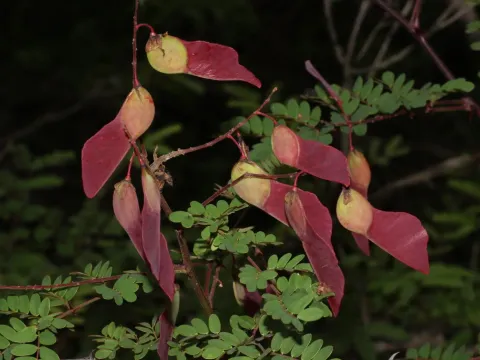
The botanical structure of Pterolobium features bipinnate leaves and small, often fragrant flowers. Its most significant trait is the samara-like pod, which is winged and designed for wind-assisted dispersal, a key evolutionary adaptation for colonizing new areas.
For cultivation purposes, Pterolobium requires well-draining soil and a location with full sun exposure. It is particularly effective in reforestation projects or as natural fencing in tropical regions due to its rapid growth rate and hardy stems.
As a legume, Pterolobium contributes to soil health through symbiotic nitrogen fixation. This ecological role makes it a valuable species for soil improvement programs and sustainable land management in tropical agricultural zones.
The primary threats to Pterolobium include fungal root rot pathogens, which thrive in waterlogged soil conditions. Proper site selection with adequate drainage is essential to protect the root system from decay during the rainy season.
Leaf-feeding insects are the most common pests, with various caterpillars and sap-sucking insects targeting the plant. Regular monitoring is necessary to prevent significant defoliation, especially in younger, more vulnerable plants.
Drought stress, while the plant is generally hardy, can lead to increased susceptibility to secondary pests and structural weakening. Maintaining a balanced irrigation schedule during extreme dry spells supports long-term vigor.
Viral infections can sometimes impact the aesthetic and productive quality of the plants. Effective control involves removing infected plant debris and ensuring no secondary host plants remain nearby in the field.
Implementation of integrated pest management (IPM) practices, such as encouraging natural predators, is highly recommended. Using biological controls minimizes chemical reliance and preserves the ecological balance within the cultivated area.