
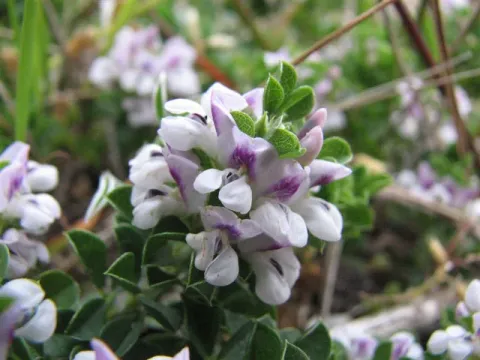
Psoralea decumbens
Psoralea decumbens
Sowing of Psoralea decumbens is generally planned for the spring season when soil temperatures reach 10–12 degrees Celsius. A critical factor is the availability of sufficient moisture in the seedbed, as seeds require good soil contact to ensure uniform germination.
What the section contains
Psoralea decumbens
Seeding rates are calculated based on seed quality, with special attention paid to the depth of planting, which should not exceed 2–3 centimeters. Excessive depth can lead to a sharp decline in field emergence, as seedlings are sensitive to soil compaction.
Pre-sowing treatment, including scarification, is highly recommended because hard-seededness is a common biological trait among legumes. This significantly increases germination rates and ensures a more consistent plant stand.
To ensure successful establishment, fields are often rolled to facilitate capillary water movement toward the germination zone. In the initial weeks of development, the plant grows relatively slowly, requiring effective weed control management.
The optimal sowing pattern depends on the intended use: wide-row spacing is typically used for seed production, while row spacing of 15–20 centimeters is preferred for biomass or fodder production.
Psoralea decumbens belongs to the Fabaceae family and is a typical xerophytic plant adapted to limited moisture conditions. The crop prefers well-drained sandy or sandy-loam soils and cannot tolerate waterlogging or high groundwater tables.
The plant demonstrates high drought resistance, making it an excellent candidate for phytoremediation on degraded or erosion-prone lands. It is highly capable of adapting to nutrient-poor substrates through its symbiotic relationship with nitrogen-fixing bacteria.
The temperature requirements for this crop are moderate, yet it can withstand both summer heat and significant fluctuations in daily temperatures. Exposure to full sunlight is essential, so cultivation plots must be free from shading.
It is not highly demanding regarding soil chemical composition but responds best to neutral or slightly alkaline pH levels. In acidic soils, pre-planting liming is required to establish favorable conditions for beneficial microbial activity in the rhizosphere.
Psoralea decumbens is valued for its robust root system, which penetrates deep soil horizons, promoting soil structure and nitrogen enrichment. This makes it a valuable component in crop rotation strategies for arid regions.
The primary threats to Psoralea plantings are fungal diseases that develop when hydrothermal regimes are disrupted, particularly during periods of prolonged rainfall. Root rot is a frequent issue, especially in cases of soil over-saturation.
Pests that typically attack legumes, such as weevils and various aphid species, can cause significant damage to emerging seedlings and reproductive structures. Monitoring for these insects should begin as soon as the first true leaves appear.
Defoliating insects can significantly reduce vegetative mass, negatively impacting overall crop productivity. Preventive measures include using resistant varieties and ensuring timely weed removal to reduce alternate host availability.
Nematodes also represent a serious risk factor, particularly on older plots where crop rotation is not strictly followed. Nematode infestation of the root system significantly impairs the plant's ability to fix nitrogen and absorb moisture.
Disease and pest management should rely on integrated protection methods to minimize the use of toxic pesticides. Rotating crops is highly recommended to disrupt the breeding cycles of specific pathogens.
Seed harvesting is conducted during the phase of full maturity, when pods acquire their characteristic color and seed moisture content decreases to a safe storage level. Avoiding over-ripening is crucial to prevent losses due to pod shattering.
If the crop is utilized for fodder, mowing should occur at the beginning of the flowering period, when the concentration of nutrients in the green mass reaches its peak. This ensures the production of high-protein hay or green forage.
Seed harvesting technology often involves a pre-harvest desiccation stage to equalize stand maturity. This is particularly relevant when plant development is uneven, which is common in perennial legume varieties.
Post-harvest processing includes cleaning to remove debris and mandatory drying to a moisture content of no more than 10–12 percent. These conditions are necessary to guarantee long-term viability of the seed stock.
The use of modern harvesting equipment designed for gentle threshing helps minimize seed coat damage, which is essential for maintaining high germination vigor during storage and for future seasons.