
Psoralea esculenta
Psoralea esculenta
Psoralea esculenta, widely known as the prairie turnip or breadroot, is a perennial herbaceous plant belonging to the Fabaceae family. Historically, it served as a vital staple food for Indigenous peoples of North America due to its nutritious, starchy, and edible tubers.
What the section contains
Psoralea esculenta
Sowing in an agricultural setting usually takes place in early spring after the soil has warmed sufficiently. The seeds possess a hard seed coat, necessitating scarification or cold stratification to break dormancy and ensure uniform germination.
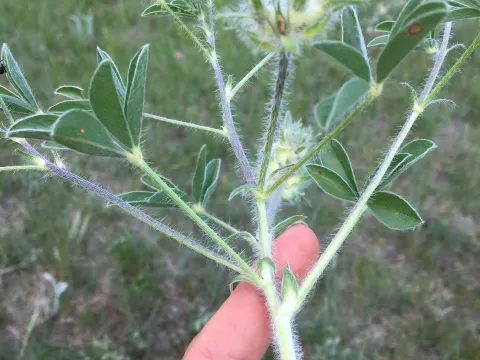
The plant features a distinct root system with a primary taproot that develops tuberous, potato-like swellings. The stems are typically erect or spreading, covered with fine hairs, and the leaves are palmately compound, characteristic of the legume family.
Originating from the North American prairies, the crop is exceptionally hardy and adapted to open, sunny environments. It performs best in regions that mimic its natural habitat, requiring ample space and minimal competition from taller, invasive vegetation.
Economically, this crop is primarily grown in niche markets, ethno-botanical gardens, and for restoration ecology. The tubers, which have a flavor reminiscent of chestnuts or sweet potatoes, are highly prized for their energy density and nutritional content.
Psoralea esculenta requires well-drained, light sandy or loamy soils with a neutral to slightly alkaline pH. Waterlogged conditions are detrimental, as they quickly trigger root rot and inhibit the development of the tuberous storage organs.
High light intensity is essential for the crop's development. As a plant adapted to prairie ecosystems, it requires full sun throughout the growing season to maximize photosynthesis and promote the storage of carbohydrates in the roots.
As a legume, the prairie turnip forms symbiotic relationships with nitrogen-fixing bacteria, reducing the need for intensive nitrogen fertilization. However, balanced levels of phosphorus and potassium are necessary to support the healthy growth of the tubers.
Water management should focus on consistent, moderate moisture during the seedling stage. Once established, the plants exhibit remarkable drought tolerance, which is a trait evolved from their exposure to the unpredictable prairie climate.
The crop is highly temperature-resilient, surviving harsh winters in a dormant state. The optimal temperature range for active vegetative growth is between 20°C and 25°C, ensuring robust physiological activity before the end of the season.
Root rot is the most significant threat to Psoralea esculenta, especially in heavy or poorly drained soils. Fungal pathogens thrive in moist, stagnant conditions, making soil preparation and proper drainage critical for disease prevention.
Pests, such as legume-specific weevils, can damage foliage and stems during the growth phase. Integrated pest management strategies, including regular field monitoring, are recommended to control infestations without compromising the crop.
Powdery mildew may occur if planting density is too high or if air circulation is insufficient within the plot. Thinning the plants to ensure adequate airflow and avoiding overhead irrigation can effectively reduce the likelihood of fungal outbreaks.
Small mammals and rodents are significant threats, as the starch-rich tubers are a favored food source. Protective fencing or natural deterrents may be necessary during the late summer and autumn months as the tubers reach maturity.
Weed management is vital during the first year of growth. Since Psoralea esculenta develops slowly, it cannot compete with aggressive weeds for sunlight and nutrients, making consistent manual weeding a necessary task for successful establishment.
Harvesting is conducted after the growing season concludes, typically in late summer or early autumn, once the aerial parts of the plant begin to wither and turn yellow, indicating that nutrients have migrated into the tubers.
The tubers must be excavated with extreme care due to their brittle nature. Using manual tools like garden forks is preferred over heavy machinery to prevent mechanical damage, which could otherwise lead to rapid post-harvest decay.
Once harvested, the tubers should be cleaned of soil and debris, then cured in a cool, shaded, and well-ventilated location. This curing process improves their shelf life and prepares them for storage or immediate culinary use.
Yields vary significantly based on soil quality, precipitation, and planting density. While not as high-yielding as modern commercial root crops, the stability and nutritional value of Psoralea esculenta make it a valuable resource for specialized agriculture.
For seed production, a portion of the crop should be left in the ground until the seed pods are fully mature and dry. Seeds are harvested, cleaned, and stored in a cool, dry place to maintain viability for the following planting season.