
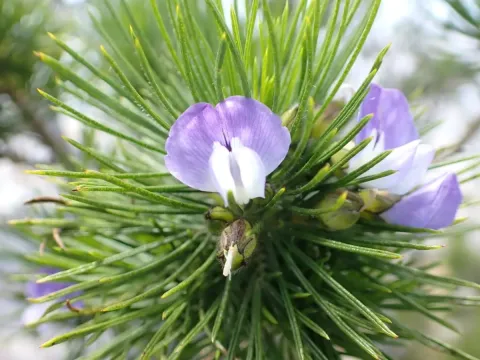
Psoralea pinnata
Psoralea pinnata
Psoralea pinnata, commonly known as the fountain bush, is a perennial evergreen shrub belonging to the Fabaceae family. Native to South Africa, it is widely recognized for its elegant pinnate foliage and pea-like flowers that range in color from white to deep violet.
What the section contains
Psoralea pinnata
The plant thrives in well-drained, slightly acidic to neutral soils. It exhibits a high degree of versatility, although it prefers light, sandy, or loamy soil textures that allow for proper aeration of the root system and prevents waterlogging, which the plant dislikes.
Climatically, it is suited for mild regions where temperatures do not drop significantly below freezing. It requires full sun exposure to maintain its shape and promote vigorous flowering; insufficient light can lead to leggy growth and reduced reproductive output.
Agronomic management involves maintaining soil moisture during the establishment phase and applying moderate fertilization. Its nitrogen-fixing capacity makes it a valuable species for soil improvement in sustainable agroforestry systems.
Economically, it is used in landscaping as a hedging plant and in environmental projects for soil stabilization. Its ability to improve soil nitrogen levels naturally provides long-term fertility benefits to the surrounding ecosystem.
Fungal infections, such as powdery mildew, are the primary threats during periods of high humidity. These pathogens thrive in stagnant air, making proper spacing between plants essential to ensure adequate ventilation and prevent spore dispersal.
Root rot is a critical concern in poorly drained soils. Overwatering, especially in cooler temperatures, can lead to the death of the root system, which is often irreversible. Ensuring high-quality drainage is the most effective preventative measure.
Insects like aphids and spider mites are typical pests that infest the tender new growth. They reduce plant vitality by extracting sap and can facilitate the transmission of viral diseases if left unchecked for prolonged periods.
Leaf-eating beetles may cause aesthetic damage and reduce the plant's photosynthetic capacity. Integrated pest management strategies, including the introduction of natural predators, are recommended over broad-spectrum chemical interventions.
Regular maintenance, including the removal of dead or infected branches, significantly reduces the reservoir for pests and diseases. A proactive approach to plant health keeps the shrubs robust and resilient against seasonal outbreaks.