
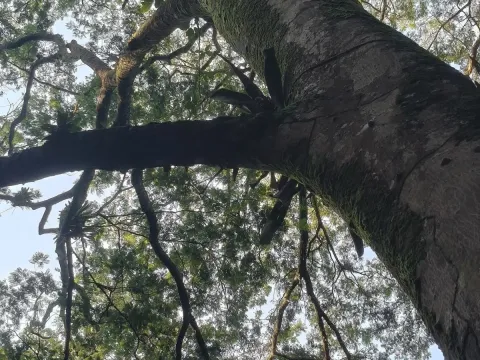
Pseudopiptadenia
Pseudopiptadenia
Pseudopiptadenia is a genus of flowering plants belonging to the legume family, Fabaceae. These trees are native to tropical regions of South America, primarily flourishing in humid forest environments and disturbed areas within the rainforest biome.
What the section contains
Pseudopiptadenia
The botanical structure of these trees typically includes bipinnate leaves and clusters of small, fragrant flowers. As members of the Mimosoideae subfamily, they are often associated with nitrogen-fixing bacteria, which supports their establishment in various soil types.
Climatic requirements are strictly tropical, demanding high annual precipitation and consistent temperatures throughout the year. They thrive in locations with strong sunlight exposure but can tolerate moderate shade during the initial growth stages of their life cycle.
Regarding soil conditions, Pseudopiptadenia prefers well-drained substrates that prevent the accumulation of excess moisture near the root system. They adapt best to fertile, loamy soils that provide both stability and sufficient nutrient access for robust wood formation.
Economically, the genus is valued primarily for its timber, which is often used in local construction and carpentry due to its durability. Beyond commercial use, these trees are essential for ecological restoration projects aimed at rehabilitating degraded forest lands.
Major threats to the health of these trees include pathogens that induce leaf spot diseases and stem rots, particularly in dense stands with poor air circulation.
Insect pests, such as wood-boring beetles, represent a significant risk factor as they can cause extensive gallery damage to the vascular system of the tree, potentially leading to decline.