
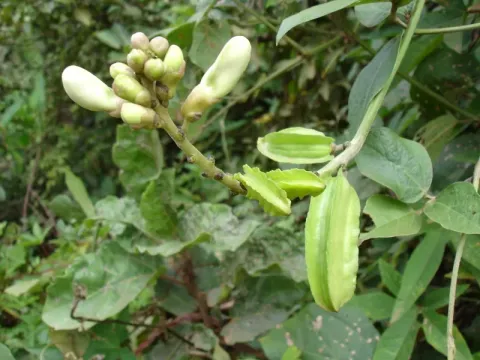
Psophocarpus palustris
Psophocarpus palustris
Psophocarpus palustris is a significant species within the Fabaceae family, recognized for its hardiness and potential as a versatile agricultural crop.
What the section contains
Psophocarpus palustris
Sowing typically takes place at the onset of the rainy season, ensuring that the seeds receive adequate moisture for germination in the tropical climate.
Optimal planting involves preparing well-tilled soil, allowing the root system to penetrate deeply and establish a strong foundation for the climbing vine.
Seed spacing must be carefully calculated to allow for proper airflow and sunlight penetration, which are essential for reducing the risk of fungal infections.
In managed agricultural systems, pre-soaking the seeds can significantly increase the germination rate and ensure a more uniform development of the crop.
This crop thrives in warm, humid conditions and requires plenty of sunlight to achieve its maximum biomass production and reproductive yield.
The ideal soil conditions are well-drained, fertile loams, although the plant displays a remarkable ability to adapt to varying soil textures in its native range.
Being a leguminous plant, it forms a symbiotic relationship with nitrogen-fixing bacteria, which reduces the need for external nitrogen fertilizers.
Vertical support systems, such as trellises or wooden stakes, are necessary because of the plant's natural growth habit as an vigorous climbing vine.
Adequate water supply is crucial during the flowering and pod-setting stages to ensure the development of high-quality seeds and healthy pods.
The yield of Psophocarpus palustris is characterized by both its nutritious pods and its tuberous roots, making it a dual-purpose crop for subsistence farming.
Continuous harvesting of young pods encourages the plant to maintain production over a longer period, significantly increasing the total seasonal output.
Under optimal management, the species can produce a high density of foliage, which serves as a nutrient-rich forage for livestock after seed harvest.
Agricultural researchers focus on selecting high-yielding varieties that exhibit resistance to environmental stressors while maintaining desirable pod traits.
Consistent nutrient management, particularly with potash and phosphorus, directly impacts the quality and volume of the harvest obtained from the plants.
Fungal diseases are the most common threat, often appearing during periods of prolonged high humidity and poor air circulation within the plant canopy.
Root-knot nematodes can potentially impact the plant's health in areas where crop rotation is not strictly followed, requiring prophylactic management.
Insect pests, including various aphids and foliage-feeding beetles, can cause significant damage to young plants, necessitating integrated pest management.
Preventative measures, such as removing debris and utilizing disease-resistant cultivars, are effective ways to mitigate the spread of viral pathogens.
Monitoring the crop for early symptoms of nutrient deficiency or stress allows for quick corrective actions before damage impacts the total yield potential.
Harvesting usually begins when pods reach the edible stage, which is identified by their succulent texture and bright, vibrant coloration.
For seed production, pods are left on the vine until they are fully mature and show signs of drying, which is indicative of peak nutritional maturity.
Manual harvesting is often preferred for fresh market produce to prevent physical damage to the delicate pods and ensure a premium quality output.
Proper post-harvest storage involves drying the seeds in well-ventilated areas to prevent spoilage and maintain their viability for future planting cycles.
Efficient harvesting techniques minimize post-harvest losses and ensure that the harvested biomass is ready for either immediate consumption or processing.