
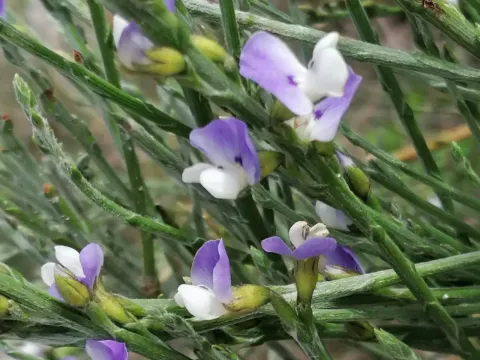
Psoralea aphylla
Psoralea aphylla
Psoralea aphylla is a distinct species within the Fabaceae family, native to the Western Cape region of South Africa. As the name suggests, this plant is characterized by its leafless appearance, where the stems have taken over the primary photosynthetic role, creating a unique aesthetic.
What the section contains
Psoralea aphylla
Botanically, the plant presents as a slender, upright shrub that can reach significant heights under favorable conditions. Its stems are often cylindrical or slightly flattened, and during the flowering season, it produces clusters of small, attractive blue to violet flowers that contrast sharply with the green stems.
Regarding cultivation, Psoralea aphylla requires environments that mimic its native Mediterranean-like climate. It thrives in positions that provide full sun exposure for the majority of the day, which is essential for maintaining the health and vigor of its photosynthetic stems.
Soil requirements are quite specific: the plant demands excellent drainage to prevent root rot, a common issue for many South African legumes. Sandy or stony soils with a moderate to slightly acidic pH are ideal, as they prevent the retention of excessive moisture in the root zone.
In terms of practical utility, this species is primarily valued for its ornamental characteristics. It is used in xeriscaping and botanical collections where drought-tolerant, visually striking plants are desired. It also contributes to soil health through nitrogen fixation, typical of many legumes.