
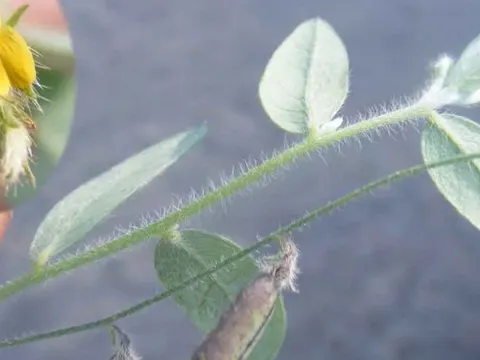
Prostrate rattlepod
Crotalaria prostrata
Crotalaria prostrata is a leguminous herb widely used as a cover crop and green manure due to its excellent nitrogen-fixing properties. Sowing usually occurs during the warm season when the risk of frost has completely passed.
What the section contains
Prostrate rattlepod
The seeds require soil temperatures between 18 and 20 degrees Celsius to achieve optimal germination rates. It is recommended to scarify the seeds before planting to overcome their naturally hard outer coat, which ensures a more uniform field emergence.
Planting depth should be kept between 2 and 3 centimeters, depending on the specific texture of the soil. Precise depth control is essential to prevent seed rot and ensure strong seedling establishment in the first few weeks of growth.
Seeding rates are adjusted based on the intended use; higher densities are preferred for weed suppression and soil coverage. When grown for seed production, lower densities are used to provide enough space for individual plant development.
The plant exhibits rapid initial growth, which allows it to outcompete weeds effectively. Providing sufficient moisture during the establishment phase is key to maximizing the crop's vegetative potential.
This crop thrives in tropical and subtropical climates, requiring high levels of solar radiation and warmth for optimal development. It is highly drought-tolerant, making it suitable for regions with variable rainfall patterns.
The ideal soil conditions for Crotalaria prostrata are light, sandy, or well-drained loamy soils. Waterlogging and poor drainage are detrimental to the plant, often causing root system failure and stunted growth.
As a legume, the plant forms a symbiotic relationship with nitrogen-fixing bacteria. This feature allows it to improve soil fertility and reduce the need for synthetic nitrogen fertilizers in subsequent crop cycles.
The preferred soil pH for this species is neutral to slightly acidic. While it can adapt to various soil types, extremely alkaline or saline soils should be avoided to prevent nutrient deficiency and restricted growth.
Management requirements are generally low, mainly involving weed control during the early stage. Once the canopy closes, the plant acts as a living mulch, suppressing further weed interference automatically.
Crotalaria prostrata is highly valued for its biomass production, which is a critical factor for soil improvement. Biomass yields can reach 20–30 tons per hectare, providing substantial organic matter for soil enrichment.
The nitrogen contribution from this crop is significant, often providing 100–150 kg of nitrogen per hectare to the soil. This nitrogen boost is essential for restoring productivity in fields exhausted by intensive farming.
Seed production is another vital aspect of its cultivation. Well-managed fields can yield approximately 0.5 to 1 ton of seeds per hectare, allowing farmers to maintain their own supply for future seasons.
Soil structural improvement is a major benefit, as the deep root system of the plant enhances porosity and infiltration. This process improves air and water movement, leading to higher overall farm productivity.
To capture the most benefit, the crop should be incorporated into the soil during its full bloom phase. At this time, the concentration of nitrogen and other nutrients within the green tissues is at its maximum.
Despite being a robust crop, Crotalaria prostrata can face challenges from fungal diseases, especially in high-humidity environments. Root rot and powdery mildew are the most common issues that need monitoring.
Pests such as aphids and certain lepidopteran larvae may target the foliage and buds. Regular field inspections and biological control methods are usually sufficient to manage these populations effectively.
Adherence to a strict crop rotation schedule is the most effective way to prevent the buildup of soil-borne pathogens. Rotating away from legumes for at least three years significantly lowers disease risks.
Nematode infestations can occasionally affect the effectiveness of nitrogen fixation by damaging root nodules. Soil health management and the use of certified clean seeds help mitigate these threats effectively.
Using high-quality, treated seeds is a fundamental preventive measure. Proper seed storage and handling ensure that the plants get a healthy start, which is the best defense against environmental and biological stresses.
For green manure, harvesting occurs at the peak of the flowering stage. The plants are mowed down and incorporated into the soil using mechanical discing to ensure even distribution of organic matter.
Incorporation should be done during warm, moist conditions to facilitate rapid decomposition. If the soil is too dry, decomposition will be slow and may not provide immediate benefits to the following crop.
Seed harvesting requires careful timing, as the pods are prone to shattering once they reach full maturity. Harvesting should start when the majority of pods have turned brown to minimize field losses.
Post-harvest processing involves threshing and cleaning to remove debris and foreign material. Storing the seeds in cool, dry, and ventilated conditions will maintain their viability for future planting.
Efficient harvest management depends on the right equipment settings. Minimizing mechanical damage during threshing is vital to preserving seed quality and ensuring a high germination rate for the next season.