
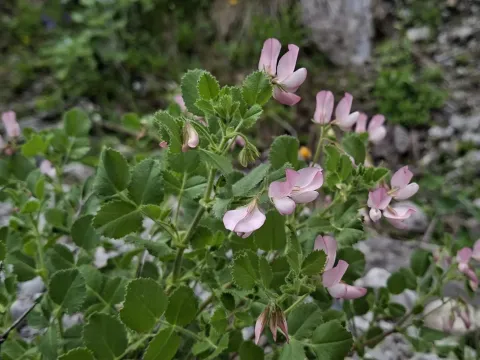
Round-leaved restharrow
Ononis rotundifolia
Sowing of Ononis rotundifolia is best performed in the spring, once soil temperatures reach 10-12 degrees Celsius to ensure consistent germination.
What the section contains
Round-leaved restharrow
Seeds have a hard coat, so scarification is highly recommended to improve moisture absorption and increase the overall emergence rate of the crop.
The seeds should be sown at a shallow depth of 1-2 centimeters, as they are small and can struggle to emerge if buried too deeply in the soil.
Both direct sowing in the field and starting seeds in trays for transplanting are viable options, depending on the specific climate of the growing region.
Proper spacing between rows, typically 45 to 60 centimeters, is crucial to ensure adequate sunlight and airflow for the developing plants.
As a member of the Fabaceae family, the round-leaved restharrow is a hardy perennial shrub that thrives in sunny and well-lit environments.
The plant prefers light, well-drained soils, such as sandy loams or calcareous types, as these prevent the moisture retention that can damage roots.
It exhibits notable drought tolerance once established, thanks to its deep taproot system that allows it to access water in deeper soil layers.
This species is well-adapted to the climatic conditions of mountainous regions in Southern and Central Europe, showing resilience to temperature fluctuations.
Good soil aeration is critical; heavy clay soils that become waterlogged should be improved with organic amendments or coarse sand to promote growth.
The primary agricultural interest in Ononis rotundifolia lies in its use as a source of medicinal raw materials, specifically its leaves and root systems.
The plant is rich in flavonoids, essential oils, and tannins, which are extracted for pharmaceutical use in various herbal preparations.
In certain contexts, the young vegetative growth can serve as supplementary forage for small ruminants like sheep, provided it is harvested early.
Optimal biomass production is typically achieved by the third or fourth year of growth, as the shrub matures and accumulates its maximum chemical content.
Overall yields of the harvestable product depend heavily on soil fertility management, particularly the strategic use of potassium and phosphorus fertilizers.
Powdery mildew is a common fungal threat to the plant, particularly during seasons characterized by high humidity and inadequate ventilation between plants.
Root rot often occurs if the plant is grown in overly heavy or saturated soil, where excess water promotes the growth of harmful soil-borne pathogens.
Weevils can be problematic for the foliage and buds, causing cosmetic damage and potentially reducing the quality of the harvested medicinal material.
Aphid infestations may target the tender young shoots, causing curling and reduced vigor, which can stunt the overall development of the bush.
Preventative management, including strict crop rotation and keeping the planting area free of dense weeds, is the most effective way to maintain plant health.
The aerial parts of the plant should be harvested during the peak flowering period to ensure the highest concentration of active therapeutic compounds.
Stems are cut with sharp implements 10-15 centimeters above the ground, allowing for healthy regrowth and preventing damage to the primary crown.
Proper drying is essential; the harvested material should be spread in thin layers in a shaded, well-ventilated area to preserve color and potency.
Roots are traditionally harvested in the autumn after the plant has entered dormancy, ensuring that metabolic energy remains stored in the root tissue.
After excavation, the roots must be cleaned of all soil and debris, washed, and dried promptly to avoid fungal growth or premature fermentation.