
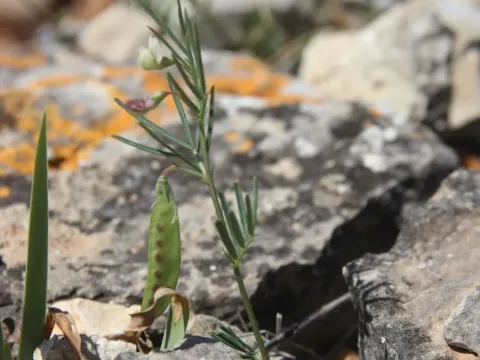
Rock vetch
Lathyrus saxatilis
Rock vetch (Lathyrus saxatilis) is an annual herbaceous plant belonging to the Fabaceae family. Adapted to survive in challenging environments, this species is typically found on rocky slopes, where it has evolved to thrive in nutrient-poor substrates and regions with high solar radiation.
What the section contains
Rock vetch
The geographic range of this culture includes parts of the Mediterranean, where it occupies specialized ecological niches. Its root system is deep and penetrating, allowing the plant to reach water sources trapped within rock fissures, which defines its remarkable resilience to drought compared to other legumes.
Cultivation requirements for rock vetch emphasize well-drained, alkaline, or neutral soils. The plant shows high intolerance to acidic environments and excessive moisture, which can lead to rapid root decay. A steady supply of sunlight is essential for optimal flower production and seed maturity.
The botany of Lathyrus saxatilis features pinnate leaves ending in tendrils, providing support in natural mountain habitats. The stems are usually low-growing or climbing, covered in fine hairs that help regulate temperature and moisture loss. The reproductive mechanism is highly efficient, often relying on self-pollination.
Regarding хозяйственное use, rock vetch serves as a genetic resource for breeding programs aimed at creating drought-resistant fodder crops. It is also highly valued in sustainable agriculture as a cover crop that contributes to nitrogen fixation and soil stabilization in arid or eroding landscapes.
Rock vetch is susceptible to several pathogens, primarily fungal infections that flourish when soil drainage is poor. Root rot and Fusarium wilt are among the most critical diseases that can decimate a stand within a single growing season, particularly if the plant is under abiotic stress.
Pest pressure is frequently exerted by legume-specific insects such as the pea weevil and various species of aphids. These insects directly impact the yield by damaging seed pods or reducing the photosynthetic capacity of the foliage through sap feeding, which in turn weakens the plant's structural integrity.
Leaf-eating caterpillars, particularly those from the Noctuidae family, pose a consistent threat during the early growth stages. They can skeletonize the leaves, severely hindering the plant's ability to fix atmospheric nitrogen and accumulate biomass, leading to poor yield outcomes.
Powdery mildew represents a significant risk in areas with high humidity and insufficient air circulation between plants. This disease manifests as a dense white film over the leaves, drastically reducing the surface area available for light absorption and disrupting essential plant physiological processes.
Management of these threats involves a proactive approach: selecting disease-resistant seeds, maintaining appropriate plant spacing to ensure airflow, and timely intervention with biological or chemical control agents when threshold infection levels are exceeded in the field.