
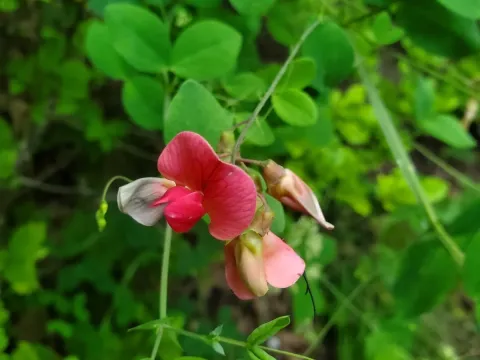
Round-leaved vetchling
Lathyrus rotundifolius
Round-leaved vetchling (Lathyrus rotundifolius) is a perennial herbaceous plant belonging to the Fabaceae family. It is recognized for its climbing stems and distinctive, nearly circular leaflets that differentiate it from other species in the Lathyrus genus.
What the section contains
Round-leaved vetchling
Originating from the Caucasus region and parts of Asia Minor, this plant is naturally adapted to forest edges and shrubby habitats. These native environments dictate its preference for slightly sheltered conditions rather than fully exposed, arid locations.
Regarding soil requirements, the species thrives in well-draining, nutrient-rich loams. It is intolerant of waterlogging, which often leads to root rot, a common issue in heavier, compacted clay soils where drainage is insufficient for healthy legume development.
The plant demonstrates a preference for temperate climates with adequate rainfall during the active growth phase. In gardening and agricultural settings, it is often utilized for its aesthetic value as a climbing ornamental, though it holds potential as a forage component.
Agrotechnical management includes providing structural support, such as trellises or neighboring vegetation, which is essential for the climbing habit of the plant to ensure maximum foliage exposure and efficient photosynthesis.
The most significant pathological threats to the crop include powdery mildew and rust infections, which are facilitated by high humidity levels and poor airflow. Managing plant density is critical for reducing the incidence of these fungal outbreaks.
Insect pests, including aphids and various species of weevils, can cause substantial damage to the leaves and developing pods. Integrated pest management strategies, such as introducing natural predators, are recommended over broad-spectrum pesticide use.
Winter survival can be impacted by severe frost if the soil moisture is excessive. Ensuring that the soil is properly drained before the onset of winter is a key strategy for maintaining the longevity of the perennial root system.
Weed management in the early stages of establishment is vital, as the seedlings of Lathyrus rotundifolius do not compete well with vigorous grasses. Manual weeding or careful mulching can help protect the young plants until they become fully established.
Regular scouting for early signs of chlorosis or leaf spot helps in applying targeted treatments, ensuring the health and productivity of the stand throughout the growing season.