
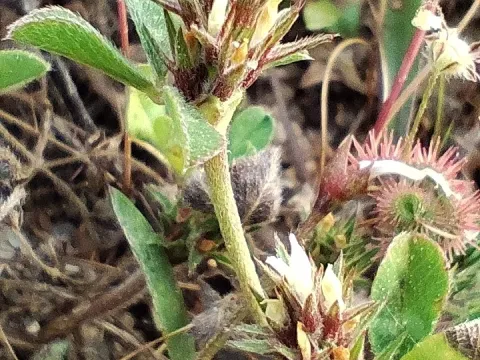
Rough clover
Trifolium scabrum
Rough clover is an annual legume that typically requires sowing in early spring, once soil temperatures consistently reach levels suitable for germination.
What the section contains
Rough clover
The seeds should be sown at a shallow depth of approximately 1 to 2 centimeters to ensure they have sufficient energy to reach the surface while maintaining proper contact with soil moisture.
Preparation of a fine, firm seedbed is essential for successful establishment, as this promotes uniform emergence and reduces the risk of seedling desiccation.
In regions with Mediterranean-type climates, autumn sowing is also a viable practice, allowing the plants to establish before the onset of winter rains.
Seeding rates should be adjusted based on the purity of the seed lot, generally ranging from 8 to 12 kilograms per hectare for pure stands.
This species is highly adapted to full sun exposure and generally performs poorly in shaded areas, making it unsuitable for intercropping with tall, dense vegetation.
Rough clover thrives in dry, infertile, and sandy soils where other more demanding legumes might fail to produce significant biomass.
It exhibits remarkable drought tolerance, which allows it to persist through harsh, dry summer periods that would cause mortality in less adapted species.
While it prefers neutral to slightly alkaline soil conditions, it demonstrates resilience across a variety of soil types provided they have adequate drainage.
Waterlogging is a primary limiting factor for this species; therefore, site selection should prioritize well-drained slopes or sandy loam soils.
The dry matter yield of rough clover is modest compared to large-leafed clover varieties, making it more suitable for low-intensity pasture systems.
Its primary agricultural value lies in its ability to improve soil nitrogen levels and stabilize soil structure in marginal or degraded landscapes.
Seed production requires careful timing, as the seed heads mature relatively quickly and can shatter if harvested too late in the season.
When used for grazing, it provides highly palatable and nutritious forage that recovers well if grazing pressure is managed during the peak growing season.
Yield stability can be enhanced through the strategic application of phosphorous, which promotes deeper root development and overall plant vigor.
Fungal diseases, particularly powdery mildew, can affect the crop when humidity levels remain high for extended periods, especially in dense stands.
Insects like clover seed weevils can significantly reduce potential seed yields by feeding on the developing ovaries within the flower heads.
Root rot pathogens may build up in the soil if the plant is grown repeatedly on the same plot, necessitating a strict multi-year crop rotation schedule.
Viral pathogens, often vectored by aphids, can cause stunting and leaf chlorosis, leading to reduced photosynthesis and overall stand decline.
- Implement integrated pest management to monitor aphid populations.
- Use certified disease-free seeds to prevent initial infections.
- Ensure adequate spacing between plants to improve airflow and reduce humidity.
Harvesting for forage should ideally occur at the mid-flowering stage, balancing maximum biomass production with optimal nutritional value and protein content.
Seed harvesting should be timed when the seed heads turn from green to brown, ensuring that the seeds have reached physiological maturity.
Mechanical harvesting requires careful adjustment of combine settings to avoid excessive seed damage while effectively separating the seed from the pods.
Once harvested, the forage must be cured promptly in light swaths to preserve color and minimize the loss of fragile, nutrient-rich leaves.
Proper storage in a dry, well-ventilated environment is crucial to prevent the development of mycotoxins and ensure the long-term quality of the feed.