
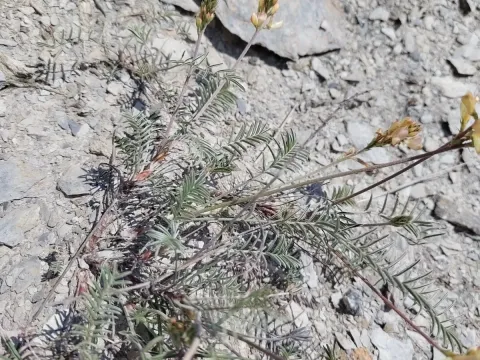
Rock sainfoin
Onobrychis saxatilis
Rock sainfoin belongs to the Fabaceae family. In agricultural practice, sowing is typically performed in early spring once soil temperatures reach 8-10 degrees Celsius, ensuring favorable conditions for germination.
What the section contains
Rock sainfoin
The seeding rate depends on the soil texture and the chosen method of planting. It is recommended to bury seeds at a depth of 2-4 centimeters to provide optimal contact with soil moisture while allowing for successful emergence.
The crop exhibits slow initial growth, making weed management essential during the early stages of development. Clean seedbeds are vital to prevent competition that could severely stunt the young plants.
Scarification of seeds is a common practice to break the hard seed coat. This pre-sowing treatment increases the speed and uniformity of germination, which is particularly important for establishing a dense stand.
As a perennial crop, Rock sainfoin should be integrated into long-term crop rotations. Its ability to fix atmospheric nitrogen contributes significantly to soil fertility, making it an excellent precursor for subsequent crops.
This species is highly drought-tolerant and thrives in well-drained, calcareous soils. It is particularly well-adapted to alkaline environments where it outperforms many other common forage legumes.
Rock sainfoin is sensitive to waterlogging and high groundwater levels. Poorly drained soils often lead to root rot infections, which significantly reduce the stand density and longevity of the field.
Abundant sunlight is necessary for optimal development. Shaded areas or regions with consistent overcast weather tend to experience slower growth rates and reduced biomass accumulation compared to sunny locations.
The crop possesses excellent cold and frost resistance. It is well-suited to regions with continental climates where winter temperatures fluctuate significantly, as it can endure deep frosts without major damage.
Soil pH should ideally range between 7.0 and 8.0. Maintaining this neutral to slightly alkaline level supports the activity of nitrogen-fixing bacteria, which are crucial for the plant's health and productivity.
Yield performance is measured by the amount of green biomass or hay produced. Under appropriate conditions, Rock sainfoin can maintain high productivity levels for several consecutive years.
High protein content is the hallmark of this crop. Unlike many other legumes, Rock sainfoin retains high nutritional value even during the full bloom stage, ensuring quality feed for livestock throughout the season.
The peak yield is typically reached during the second or third year. By this time, the root system is fully established, allowing the plant to tap into deep water reserves, which is a major advantage during dry summers.
Seed production relies heavily on insect pollination. The presence of honeybees and other native pollinators is essential for successful fertilization and obtaining a high yield of viable seeds per hectare.
After harvesting the first cut, the crop shows moderate regrowth capacity. In areas with sufficient rainfall, it can provide additional grazing opportunities or a second cut, enhancing the overall farm efficiency.
Common diseases include fungal infections like fusarium wilt and anthracnose, which are prevalent in high-humidity conditions. These pathogens target the root system and stem base, weakening the plants.
Rust is another concern that impacts the foliage, reducing the photosynthetic capacity of the plant. Small, orange-colored spots appear on the leaves, leading to chlorosis and premature leaf drop in severe cases.
Pests such as weevils pose a threat by damaging buds and developing leaves during the early spring. Furthermore, specific seed-eating insects can cause significant losses by consuming seeds inside the pods.
Bacterial wilt may occur in compacted or poorly aerated soils. The infection interferes with the plant's vascular system, leading to sudden wilting and the subsequent death of the above-ground biomass.
Proactive management includes crop rotation and the selection of disease-resistant varieties. Monitoring fields for signs of infection allows for targeted interventions before the issues become widespread across the plot.
Harvesting for green fodder or hay should take place at the onset of the flowering stage. This is the optimal window to achieve the best balance between biomass volume and nutritional quality.
For seed harvesting, it is crucial to wait until the pods have turned brown. Timely collection is essential because the pods are prone to shattering, which can lead to substantial seed losses if delayed.
During the hay-making process, swathing is recommended to allow for gradual wilting. This practice helps to preserve the leaves, which are the most nutrient-dense part of the plant, preventing excessive leaf loss.
Seed harvesting is usually done via direct combining or two-stage harvesting. Careful adjustment of the combine harvester's settings is necessary to avoid damaging the seeds during the threshing process.
Properly cured Rock sainfoin hay remains stable and highly palatable for an extended period. It is considered a premium forage, as it does not cause bloat in ruminant animals, ensuring safe feeding practices.