
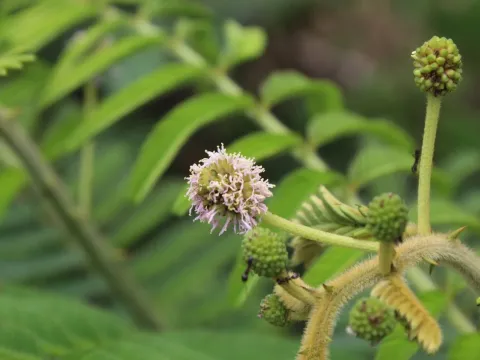
Mimosa pellita
Mimosa pellita
Mimosa pellita is a perennial leguminous shrub native to tropical regions of the Americas. It is known for its rapid growth rate and ability to adapt to diverse ecological conditions within its native range.
What the section contains
Mimosa pellita
Sowing typically begins at the onset of the rainy season to capitalize on soil moisture availability, which is critical for successful seed germination and the establishment of a robust root system.
Before planting, seeds often undergo mechanical or chemical scarification to break dormancy and ensure high germination uniformity, as the seed coat is naturally hard and water-impermeable.
For agricultural purposes, the shrub is planted in rows to facilitate periodic harvesting of green biomass. Proper spacing is essential to minimize competition and ensure maximum yield per hectare.
The establishment phase requires careful weed management to allow young Mimosa seedlings to gain dominance over competing herbaceous species, especially during the first few weeks of growth.
The plant thrives in warm, tropical climates and cannot tolerate frost. Its optimal growth temperature range is between 22 and 30 degrees Celsius, requiring high heat throughout the growing season.
Mimosa pellita is notably resilient regarding soil types, performing well in both alluvial and clay soils. However, it displays a distinct preference for areas with adequate moisture and is frequently found in riverine environments.
Exposure to full sun is highly recommended for maximizing the photosynthetic activity and biomass accumulation of the shrub, although it shows moderate tolerance to partial shade.
As a legume, it forms symbiotic relationships with nitrogen-fixing bacteria. This biological feature makes it highly beneficial for soil improvement and allows it to persist in nutrient-poor soils where other crops might fail.
Soil pH should ideally be neutral or slightly acidic. Highly alkaline or saline conditions are detrimental to the plant's health and significantly reduce the efficiency of its root nodules.
The primary agricultural utility of Mimosa pellita lies in its value as a source of high-protein forage for livestock, particularly in regions where seasonal grass shortage is a recurring challenge.
Productivity is largely determined by harvesting management. Regular, strategic cutting of the leafy biomass stimulates branching, which results in a denser shrub and greater overall dry matter yield.
The crop can be harvested multiple times per year, provided that the frequency of cutting allows for sufficient recovery time, ensuring the shrub remains vigorous and productive over several seasons.
Nutritional analysis of the leaves shows high protein content, making it an excellent supplement to traditional grass-based diets, which often lack sufficient nitrogenous components.
Farmers can achieve consistent yield levels by managing livestock grazing pressure or mechanical harvesting schedules, ensuring that the shrubs are not over-exploited during peak vegetative growth periods.
The main threats to cultivation include fungal infections that tend to thrive when plantations are overly dense and lack adequate air circulation, leading to high humidity pockets within the shrub layer.
Various insect pests, specifically leaf-eating caterpillars and aphids, can cause significant damage to young shoots, leading to stunted growth and reduced forage quality if not managed in time.
Improper harvesting techniques, such as cutting too close to the ground, can stress the plant and make it susceptible to opportunistic pathogens, thereby shortening the productive lifespan of the plantation.
Weather-related stress, such as prolonged waterlogging or insufficient light, can weaken the plant's natural defenses, increasing its vulnerability to localized outbreaks of pests and diseases.
Integrated pest management strategies are recommended, focusing on maintaining optimal plant density and performing sanitary pruning to eliminate infested branches and prevent the spread of disease.