
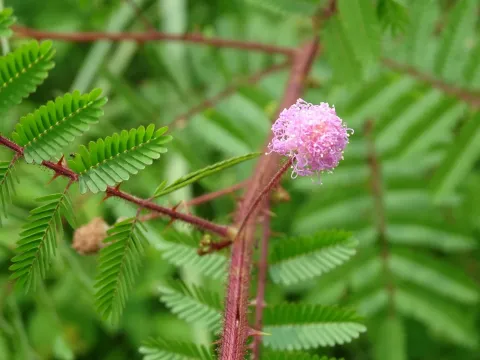
Mimosa somnians
Mimosa somnians
Mimosa somnians is a perennial herbaceous plant or small shrub belonging to the Fabaceae family. It is native to tropical regions of South and Central America, where it thrives in diverse open and semi-shaded habitats.
What the section contains
Mimosa somnians
The plant requires well-drained, fertile soil to ensure optimal development. It is particularly valued for its symbiotic relationship with nitrogen-fixing bacteria, which significantly improves soil fertility in sustainable agricultural systems.
As a tropical species, it demands consistent warmth and moisture. It is highly sensitive to frost, which limits its outdoor cultivation to tropical or subtropical zones unless grown in temperature-controlled greenhouses.
Agrotechnical practices involve regular moisture management and ensuring sufficient exposure to sunlight. The plant is relatively hardy once established but requires careful monitoring during the early stages of development.
Botanically, it is distinguished by its sensitive foliage and characteristic inflorescences. These features not only serve biological protection purposes but also add to the plant's potential utility in agroforestry and green manure programs.
The primary agricultural output of Mimosa somnians is biomass, which is utilized as a green manure or cover crop. Yield efficiency is highest when the plant is harvested before seed maturation to prevent nutrient depletion.
Seed production serves the purpose of crop propagation. Success in harvest is measured by the quality of seeds collected and the plant's ability to regenerate in subsequent growing seasons.
Common threats to the cultivation of Mimosa somnians include root rot pathogens, which are typically encouraged by waterlogged soil conditions. Proper irrigation drainage is the most effective preventative measure.
Pests such as spider mites and aphids may infest the plants during prolonged dry spells. Integrated pest management, including regular inspection and biological control, is recommended for healthy crop maintenance.