
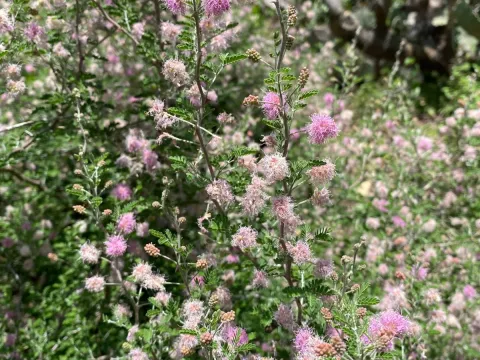
Mimosa monancistra
Mimosa monancistra
Mimosa monancistra is a perennial shrub belonging to the Fabaceae family. Native to the arid regions of Mexico, this species is well-adapted to surviving in harsh environments characterized by low water availability and intense solar radiation.
What the section contains
Mimosa monancistra
The plant thrives in well-drained, sandy or gravelly soils that offer excellent aeration. It is highly sensitive to waterlogging, which can cause root decay in a very short timeframe, making soil preparation the most critical factor for successful cultivation.
Regarding climate, Mimosa monancistra requires consistent warmth and abundant sunlight. It does not possess significant cold tolerance and must be protected from frost, as the tissue is susceptible to structural damage at freezing temperatures.
Agrotechnical management focuses on simulating its natural dryland habitat. Minimal irrigation is required once the plant is established, as excessive watering typically disrupts its natural metabolic balance and increases vulnerability to pathogens.
Morphologically, the plant is characterized by its woody stems armed with spines, which provide protection against herbivores. Its bipinnate leaves are highly responsive to environmental stimuli, folding in response to touch or the onset of dusk.
Root rot is the primary threat to the crop, predominantly caused by over-irrigation or planting in heavy, poorly drained soil. Fungal pathogens thrive in such conditions, rapidly compromising the root system's integrity.
Pests such as spider mites and aphids are known to target the foliage, especially in greenhouse conditions or when the plant is under water stress. These insects can significantly retard growth if left untreated.
Foliar diseases, including various types of mildew, can occur if the canopy is too dense and lacks adequate air circulation. Pruning and spacing are essential management practices to reduce the incidence of these infections.
Nutritional imbalances, particularly an excess of nitrogen, can lead to soft, succulent growth that is more attractive to chewing insects. A balanced fertilization program is recommended to ensure robust tissue development.
Integrated pest management (IPM) strategies, including biological control agents and localized treatments, are the most effective methods to manage outbreaks while maintaining environmental health within the agricultural site.