
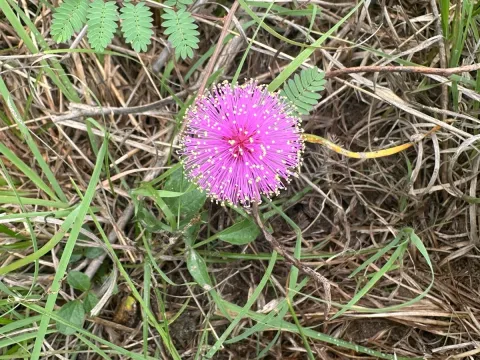
Mimosa quadrivalvis
Mimosa quadrivalvis
Mimosa quadrivalvis is a perennial herbaceous plant belonging to the legume family (Fabaceae). This species is well-known for its tactile sensitivity, as the leaflets fold rapidly in response to physical contact or external stimuli.
What the section contains
Mimosa quadrivalvis
Sowing should be scheduled during periods of stable warmth, ensuring the soil temperature is adequate to break the seed dormancy. Proper timing is essential to avoid late frost damage or excessive drying of the topsoil during germination.
Seeds of this species feature a tough coat that often requires scarification to ensure uniform germination. Mechanical or chemical treatment of seeds can significantly improve the establishment of a robust plant stand.
The seeding depth should be shallow, generally between 1 and 2 centimeters, to allow the small seedlings to emerge without exhausting their stored energy. Consistent moisture is required until the plants reach the stage of true leaf development.
In field production, row planting is preferred to facilitate weed management and allow for adequate airflow between plants. Maintaining proper spacing is crucial to prevent resource competition and ensure healthy canopy development.
Mimosa quadrivalvis prefers well-drained, sandy or light loamy soils that do not retain excess water. Soil drainage is a critical factor, as saturated conditions often lead to root rot and other physiological stressors.
As a sun-loving plant, it requires full sun exposure for optimal growth and vigor. Limited light conditions will result in spindly growth and reduced flower production, which may affect the overall quality of the plant stand.
The climate requirements for this species are subtropical or tropical in nature. It thrives in warm temperatures and is generally sensitive to freezing conditions, which can kill or severely damage the above-ground biomass.
Soil pH should ideally be neutral or slightly acidic. On extremely alkaline or saline soils, the plant may exhibit signs of nutrient deficiency, particularly regarding trace elements like iron or manganese.
This legume is capable of fixing atmospheric nitrogen through symbiosis with specialized bacteria, which enhances soil fertility. This makes it a beneficial component in crop rotation systems aiming to reduce chemical fertilizer dependency.
Root rot, primarily caused by fungal pathogens such as Pythium or Phytophthora, is a significant threat when soil moisture levels are poorly managed. High humidity in the root zone is the primary driver of these diseases.
Foliar diseases, including various leaf spots and powdery mildew, can proliferate under high humidity and stagnant air conditions. Regular scouting and maintaining proper plant spacing are effective ways to mitigate these risks.
Pests such as aphids and spider mites are common enemies of Mimosa quadrivalvis. They often target new growth, causing leaf curling and reduced photosynthesis, which inhibits the plant's growth potential.
Caterpillars and other lepidopteran larvae can also cause significant damage to the foliage. Monitoring programs should be in place to detect larval presence early, allowing for timely intervention if necessary.
Integrated pest management strategies are recommended, focusing on maintaining plant health and utilizing beneficial insect populations to control minor outbreaks of pests without the need for heavy chemical intervention.