
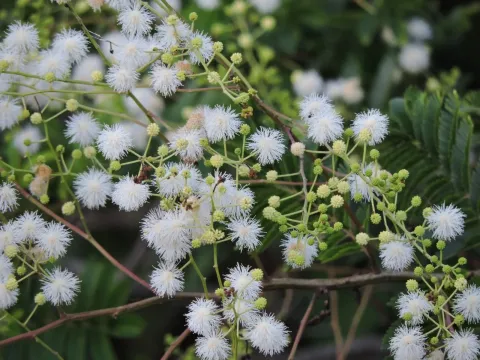
Mimosa sepiaria
Mimosa sepiaria
Sowing of Mimosa sepiaria is typically scheduled at the onset of the wet season, which provides the essential moisture for uniform germination.
What the section contains
Mimosa sepiaria
The seeds have a hard, water-impermeable coat, so scarification or soaking in warm water is highly recommended to significantly improve germination rates.
Seeds should be planted at a depth of 1 to 2 cm, ensuring good contact with moist soil while protecting them from dehydration during the initial growth phase.
Planting density varies based on the intended use: dense stands are preferred for live fences and windbreaks, while wider spacing is ideal for grazing systems.
The plant exhibits vigorous seedling growth, allowing it to quickly establish and outcompete surrounding vegetation in optimal environmental conditions.
Mimosa sepiaria is a member of the Fabaceae family and thrives as a sun-loving plant, demanding full exposure to sunlight for maximum physiological activity.
It is well-adapted to a wide range of soil types, including degraded or low-fertility soils, thanks to its ability to fix atmospheric nitrogen via symbiosis.
The plant prefers well-drained soils and is generally intolerant of waterlogged conditions, which can lead to root rot and reduced overall health.
Temperature requirements are strictly tropical or subtropical; the species is highly sensitive to frost and cold snaps, which can kill or severely damage the plant.
It exhibits moderate drought tolerance once established, though its biomass production increases significantly with regular water availability during the growing season.
The annual yield of green matter is impressive, with the potential for multiple cuts per season depending on climate, fertilization, and cutting frequency.
This crop is highly valued as a source of high-quality protein-rich fodder, making it an excellent addition to livestock nutrition programs.
Beyond fodder, the plant contributes to long-term soil health by increasing soil organic matter and improving overall structure through its extensive root system.
As a hedge species, it provides significant wind protection and serves as a barrier against soil erosion in hilly or unstable agricultural landscapes.
The duration of the flowering period makes it a useful resource for pollinators, specifically in apiculture, supporting honey bee populations in tropical environments.
Mimosa sepiaria is generally robust, but it can be susceptible to fungal foliage diseases during periods of extreme humidity and poor air circulation.
Insect pests, including various defoliators and borers, can impact plant health if populations reach outbreak levels, necessitating regular field monitoring.
Nematode infestations can occur, particularly in light, sandy soils where the plant is grown continuously without adequate crop rotation.
Early-stage weed management is crucial for the successful establishment of the crop, as seedlings can be suppressed by aggressive invasive weeds.
Integrated pest management strategies should favor biological controls, especially when the biomass is intended for direct consumption by farm animals.
For fodder production, harvesting should be performed before the onset of lignification, when nutrient content and leaf digestibility are at their peak.
Regular cutting at a height of approximately 15 cm encourages vigorous regrowth from the basal buds and prevents the plant from becoming too woody.
Seed harvesting should be timed carefully; the pods tend to dehisce upon maturity, leading to potential yield loss if collected too late.
Drying the harvested material quickly in the sun is necessary to prevent spoilage and ensure the quality of the final hay or silage product.
Post-harvest cleaning and storage in a cool, dry place are essential to maintain the viability of the seeds for future planting cycles.