
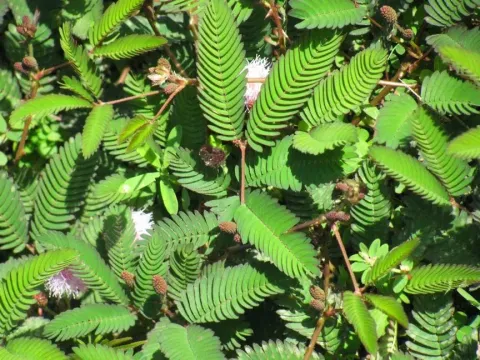
Mimosa invisa
Mimosa invisa
Sowing of Mimosa invisa is typically timed with the onset of the rainy season to ensure sufficient moisture for seed germination and initial establishment of the crop.
What the section contains
Mimosa invisa
The seeds possess a hard coat, requiring scarification prior to planting to enhance the rate and uniformity of germination in field conditions.
A shallow planting depth of approximately 1 to 2 centimeters is recommended to allow the seedlings to emerge efficiently without exhausting their energy reserves.
Standard seeding rates are determined by the intended use, whether for erosion control on slopes or for rapid biomass production as a nitrogen-fixing cover crop.
Proper spacing ensures that the plants can close their canopy quickly, effectively suppressing weed growth and reducing the need for mechanical intervention.
Mimosa invisa is a robust member of the Fabaceae family that thrives in tropical climates characterized by high temperatures and consistent rainfall throughout the season.
The plant is highly valued for its ability to adapt to acidic and nutrient-poor soils, making it an excellent candidate for reclaiming degraded lands.
While it is tolerant of various soil textures, it performs best in well-drained sandy or loamy soils where the roots can access adequate nutrients and water.
Full sun exposure is essential for the plant to achieve its maximum biomass potential, as shading significantly reduces its growth rate and overall vigor.
Soil management practices should account for the plant's aggressive growth habit, ensuring it remains contained within the designated agricultural area.
As a prolific biomass producer, Mimosa invisa significantly contributes to organic matter content in the soil, which is crucial for long-term agricultural sustainability.
The crop is highly effective at nitrogen fixation, a process facilitated by symbiotic bacteria, which substantially reduces the requirement for synthetic fertilizers.
Farmers often integrate this plant into their rotations to improve the soil structure, leading to higher yields for subsequent food crops like maize or vegetables.
The plant's ability to cover the soil surface protects against erosion from heavy tropical rains, preserving the integrity and fertility of the topsoil layer.
The most favorable window for harvesting or incorporating the biomass is during the early flowering stage to optimize the nutrient release into the soil profile.
The primary threats to this crop include fungal infections such as anthracnose, which are particularly prevalent during periods of high humidity and poor air circulation.
Pests including various aphid species and leaf-feeding insects can cause significant damage to young plants, potentially stunting growth and reducing biomass yields.
Effective management strategies rely heavily on preventive measures, such as maintaining optimal plant density and ensuring the site is well-drained to discourage pathogens.
Crop rotation serves as a critical defense, interrupting the lifecycle of host-specific pests and preventing the buildup of soil-borne diseases in the field.
Integrated pest management is preferred to maintain the ecological balance of the farmland, especially when the crop is grown in organic farming systems.