
Mimosa hostilis
Mimosa hostilis
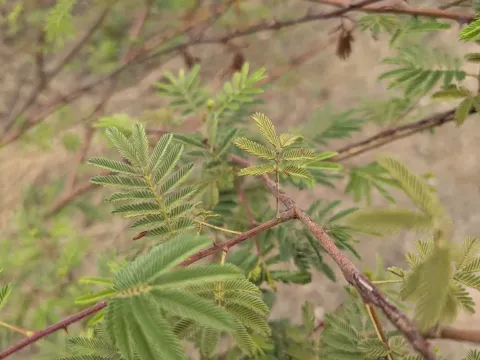
Mimosa hostilis (synonym Mimosa tenuiflora) is a perennial evergreen shrub or small tree belonging to the Fabaceae family. In natural conditions, the plant reaches heights of up to 5–8 meters, characterized by pinnate foliage and small, white, spike-like inflorescences.
What the section contains
Mimosa hostilis
The plant is native to the tropical and subtropical regions of northeastern Brazil, as well as parts of Mexico, Colombia, and Venezuela. The crop is well-adapted to hot and arid climates, thriving in dry tropical forests and savanna regions.
Optimal growth requires well-drained, sandy, or rocky soils with low organic content. The culture is highly sensitive to excessive moisture and waterlogging, making good soil drainage a fundamental requirement for successful cultivation.
Light is a critical factor for development: Mimosa hostilis is photophilous and requires full sun exposure to ensure proper wood formation and active vegetative growth. Light deficiency leads to spindly plants and a significant reduction in biomass productivity.
The temperature range must remain consistently high. The plant cannot withstand frost or prolonged exposure to temperatures below +10 degrees Celsius, which limits its commercial cultivation to tropical regions.
The primary commercial product is the bark of the roots and stems. Harvesting requires a sustainable approach, as removing all bark from the trunk leads to the death of the tree.
In commercial operations, periodic pruning of lateral branches is practiced. This method allows for bark collection without damaging the main trunk, ensuring the long-term renewability of the resources on plantations.
Harvesting usually takes place at the end of the vegetation cycle, when the concentration of secondary metabolites in the plant tissues reaches its peak, which is essential for the quality of the raw material.
Following collection, the bark undergoes natural drying in shaded, well-ventilated areas to prevent spoilage by microorganisms and to preserve the chemical properties of the material.
Industrial applications of Mimosa hostilis include the use of its bark as a natural dye in the textile industry and as an additive in the production of organic fertilizers, owing to its high tannin content.
The plant possesses a high natural resistance to diseases due to the presence of potent protective compounds in its bark and wood, which inhibit the growth of pathogenic fungi and bacteria.
The main threat to young seedlings comes from insect pests, such as weevil larvae, which can damage the root collar and lead to the wilting of the culture during its early development stages.
Improper irrigation regimes can trigger root rot, which is the most common disease encountered when growing the plant in restricted environments or in overly compacted soil substrates.
Weeds growing near young plants also pose a risk, as they compete with Mimosa for moisture and nutrients during dry periods, necessitating regular mechanical weeding.
Leaf-eating pests may cause localized damage; however, when proper crop rotation and spatial isolation of plantings are maintained, severe epiphytotics for this species are relatively rare.