
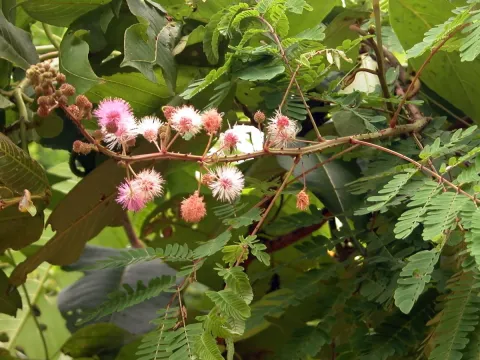
Mimosa rubicaulis
Mimosa rubicaulis
Mimosa rubicaulis is a perennial shrub species belonging to the legume family (Fabaceae). It is distinguished by its prickly stems, which are densely covered with hooked thorns, providing an effective natural deterrent against browsing animals and making it ideal for thorny hedges.
What the section contains
Mimosa rubicaulis
This species originates from tropical and subtropical regions across Asia and Africa. Due to its biological nature, it thrives in warm, frost-free environments. It is widely cultivated in tropical zones where it is appreciated for both its hardiness and its rapid growth rate.
In terms of soil requirements, the plant is quite versatile. It performs well in various soil types, including sandy or stony soils, provided they are well-drained. As a legume, it contributes to soil health by fixing atmospheric nitrogen, thereby enriching the soil for other crops.
The cultural requirement for optimal growth is full sun exposure. It is a heliophilic plant, and restricted light levels will lead to leggy, unproductive growth. Proper placement in an open landscape is essential for maintaining the structure and flowering potential of the plant.
Agrotechnical management primarily involves selective pruning to maintain the hedge's density and perimeter control. Because of its vigorous growth habit, it requires regular maintenance to keep the planting managed and restricted to the desired area within an agricultural scheme.
The plant is susceptible to common garden pests such as aphids and spider mites, which can infest the succulent young stems. In areas with poor drainage or excessive humidity, the species may fall prey to fungal infections, particularly root rot, which is the most common pathology in overwatered soils.