
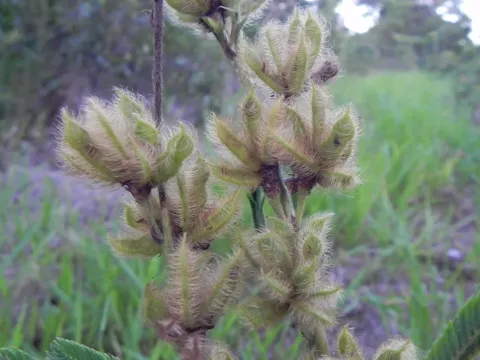
Mimosa subsericea
Mimosa subsericea
Planting Mimosa subsericea is typically scheduled for the beginning of the rainy season to ensure optimal soil moisture for seed germination.
What the section contains
Mimosa subsericea
The seeds require stable soil temperatures, preferably above 20°C, to achieve high emergence rates across the field.
The recommended sowing depth is 1 to 2 cm, ensuring that the seeds are in close contact with the soil to promote efficient water absorption.
Large-scale cultivation often involves mechanical seeding, provided that the ground is cleared of weeds to minimize early-stage competition.
Seed spacing should be adjusted to facilitate proper light penetration, which is vital for the initial vegetative growth phase of the plant.
This species of the legume family thrives in well-drained soils, showing a preference for fertile sandy loams or clay-loam textures.
Mimosa subsericea is known for its resilience in warm tropical climates and its ability to withstand short periods of seasonal drought.
The plant requires full sun exposure to maximize photosynthetic activity, though it can tolerate light shade without significant growth loss.
Soil pH should ideally be neutral or slightly acidic; corrective measures like liming may be necessary if the soil is too acidic.
Adequate soil aeration is essential for root health, and the site must be free from waterlogging to prevent root rot diseases.
The yield of Mimosa subsericea is heavily dependent on management practices such as pruning intervals and fertilization schedules.
As a legume, it contributes to soil nitrogen enrichment, which can positively impact the growth of subsequent crops in a rotation system.
When harvested as forage, the plant provides high-protein green mass, which is highly valued for livestock nutrition programs.
Frequent, moderate cutting can stimulate the development of lateral branches, potentially increasing the total biomass output over the season.
Farmers can achieve consistent yields by maintaining soil fertility and ensuring the plants have adequate space to expand their canopy.
Fungal diseases are a primary threat to this crop, especially in environments with high relative humidity and poor air circulation.
Leaf-feeding insects can cause significant foliage loss if not managed through an integrated pest control program during the growing season.
Root system issues, including rot, often arise from over-irrigation or planting in compacted soils that prevent water drainage.
Biosecurity measures, such as monitoring for signs of stress or infestation, are essential for identifying threats before they spread.
Utilizing certified seeds and healthy nursery stock is the best preventive strategy against the introduction of soil-borne pathogens.
For high-quality forage, harvesting should occur before the flowering stage, as this is when the nutrient content is at its peak.
Using mechanical harvesters set at the appropriate height ensures that the plant regrows successfully for subsequent harvest cycles.
If the purpose is seed collection, the harvest must take place when the pods are fully mature and have dried on the stems.
Post-harvest processing involves air-drying the collected biomass in a shaded area to maintain the quality and prevent degradation.
Proper storage of seeds in cool, dry conditions is necessary to preserve viability for the next planting season.