
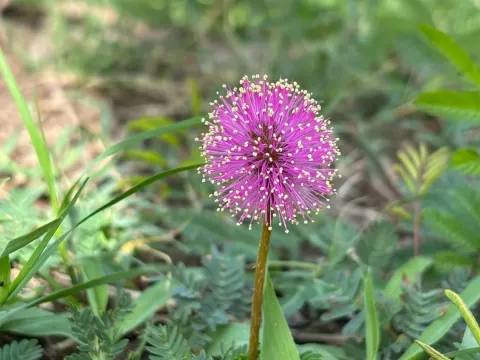
Mimosa strigillosa
Mimosa strigillosa
The sowing of Mimosa strigillosa is typically conducted during the spring season when soil temperatures are sufficiently warm. Seeds require scarification or soaking to improve germination rates, as they possess a hard outer coat.
What the section contains
Mimosa strigillosa
The optimal temperature for seed germination ranges between 20 and 25 degrees Celsius. Seeds should be sown at a depth of no more than 1-2 centimeters to ensure adequate oxygen access for the embryo.
To establish a dense ground cover, seeds should be sown at a density that encourages rapid closing of the canopy. In agricultural settings, vegetative propagation via cuttings is also a viable and common practice.
Following sowing, the site must be watered regularly to ensure the top layer of substrate does not dry out before the seedlings establish their root systems. Initial sprouts usually appear within 10 to 14 days under proper conditions.
In regions with milder climates, the crop is capable of self-seeding, which reduces labor and financial costs for annual planting when establishing perennial herb communities.
Mimosa strigillosa is a member of the Fabaceae family, valued for its high adaptability to sandy and nutrient-poor soils. It excels in environments prone to temporary flooding and short-term waterlogging.
The plant prefers sunny locations but is capable of developing in light shade as well. A crucial requirement for healthy growth is the absence of competition from tall weeds, which can suppress the development of this low-growing crop.
The culture exhibits high tolerance to soil salinity, making it a promising candidate for the reclamation of coastal areas. It actively fixes atmospheric nitrogen, thereby enriching the soil and improving its structure for future crop rotations.
This plant is sensitive to temperature regimes; it is a heat-loving species that does not tolerate severe winter frosts accompanied by soil freezing. In temperate climates, it requires protective measures or is cultivated as an annual.
The optimal pH range for active growth falls between slightly acidic and neutral levels for the soil solution.
The agricultural value of Mimosa strigillosa lies in its production of biomass, which serves as a high-quality green manure. The yield of green matter depends on the frequency of mowing and the levels of mineral nutrition.
When used as a feed supplement for livestock, the culture shows respectable nutritional indicators, being rich in plant protein. However, one must consider the plant's unique thigmonastic leaf movement upon touch.
The plant is highly valued as a groundcover crop capable of preventing soil erosion on slopes. The extensive root system produced allows for the reliable stabilization of the top fertile soil layer.
To maximize biomass output, it is recommended to conduct regular irrigation during dry spells. On average, the crop is capable of providing multiple cuttings per season under favorable moisture conditions.
Its use in landscape design provides an aesthetic, fast-growing mat that requires minimal agro-technical maintenance and infrequent fertilizer applications.
Primary threats to Mimosa strigillosa are associated with fungal diseases that arise during periods of high air humidity and poor ventilation. Powdery mildew may affect foliage under unfavorable environmental conditions.
Among pests, leaf-chewing insects pose the greatest danger, particularly during the peak vegetative period. In rare cases, root system damage from nematodes can occur if the plant is grown repeatedly in the same location.
- Fungal leaf spots
- Spider mites during hot, dry periods
- Root rot due to waterlogging
- Aphids feeding on tender young shoots
To protect the crops, preventative spraying with biological fungicides and insecticides is recommended. Maintaining proper crop rotation is vital to prevent the accumulation of soil-borne pathogens.
Timely weeding and accurate base-irrigation significantly lower the risk of disease spread and pest infestations within the plantings of this species.