
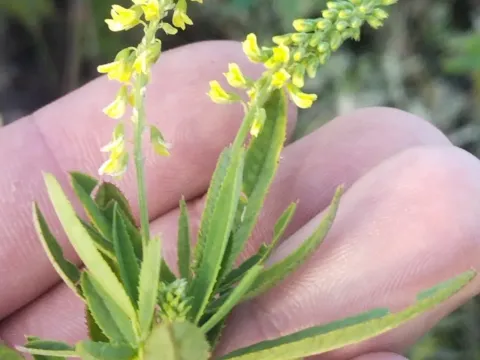
Yellow sweet clover
Melilotus dentatus
Yellow sweet clover is a biennial legume, and the sowing time is generally determined by the intended use of the crop. Early spring is considered the best window for planting, as it allows seeds to benefit from stored soil moisture.
What the section contains
Yellow sweet clover
Since the seeds have a hard seed coat, scarification is highly recommended to ensure rapid and uniform germination. The crop is typically drilled in rows spaced 15–25 cm apart at a shallow depth of approximately 1.5 to 2 cm.
The plant demonstrates high seedling vigor, establishing a strong root system during its first year of growth. It is important to ensure the plant has enough time to establish itself before the onset of winter dormancy to survive harsh climates.
Fall seeding is also a viable option in certain regions, allowing for early spring emergence. This technique can be beneficial in areas where spring soil moisture evaporates quickly, hindering the emergence of late-sown seeds.
The seeding rate ranges between 12 and 15 kg per hectare, depending on seed purity and germination percentage. Proper spatial distribution is crucial to prevent lodging and to allow adequate sunlight to reach the lower canopy of the crop.
Yellow sweet clover (Melilotus dentatus) belongs to the Fabaceae family and is recognized for its unique ability to thrive in saline and alkaline soils. It serves as an excellent halophytic crop for land reclamation projects.
This plant is highly drought-tolerant and performs well under continental climatic conditions, handling both intense summer heat and cold winter temperatures with ease. It is quite resilient in various geographical zones.
While not overly demanding regarding soil type, the plant flourishes in calcareous, lime-rich environments. However, it requires well-drained soil, as it is highly susceptible to root damage in waterlogged or swampy conditions.
Like other legumes, it forms a symbiotic relationship with nitrogen-fixing bacteria in its root nodules. If the soil lacks these specific bacteria, seed inoculation is essential for healthy plant development and optimal biomass yield.
Sunlight is a key factor for the successful growth of yellow sweet clover. It does not tolerate shade well, so planting it in areas with high light exposure is mandatory for ensuring maximum vegetative development and productivity.
The biomass yield of yellow sweet clover depends on the fertility of the soil and the frequency of rainfall during the growing season. On average, farmers can expect a green mass yield of 18–28 tons per hectare.
When harvested as hay, the yield typically falls between 4 and 6 tons per hectare of dried matter. The nutritional value is quite high, provided the harvest occurs at the optimal phenological stage to prevent stem lignification.
To improve yield on marginal soils, phosphorus and potassium fertilization can be highly beneficial. Nitrogen supplementation is generally unnecessary because the plant actively fixes atmospheric nitrogen, enriching the soil for future crops.
The second year of growth produces the highest yield, as the plant moves into the reproductive phase. Managing the timing of the first cut is critical for maintaining the health of the plant and allowing for potential regrowth.
Seed production is also commercially viable, with yields ranging from 0.5 to 0.8 tons per hectare under ideal conditions. Harvesting should be performed carefully to avoid excessive shattering of the seeds during the cutting process.
The most common diseases affecting yellow sweet clover include powdery mildew and various leaf spot fungi, which thrive in humid, poorly ventilated conditions. Root rots may also occur if the soil remains excessively saturated.
Common pests include sweet clover weevils, which damage the foliage and roots, potentially hindering the plant’s ability to fix nitrogen. Aphids and various leaf-eating caterpillars can also cause significant damage during the vegetative stage.
Effective management strategies include proper crop rotation, avoiding the continuous cultivation of legumes on the same field for several years. This practice breaks the cycle of soil-borne pests and pathogenic infections.
Integrated pest management, including the use of beneficial insects and resistant varieties, is the preferred approach for large-scale production. Chemical treatments should only be used as a last resort when pest thresholds are significantly exceeded.
Seed treatment before planting is a crucial step to protect the emerging plants from early-season threats. Maintaining clean fields by controlling weeds is also vital, as weeds often act as reservoirs for various crop diseases and pests.
Harvesting for hay should occur at the very beginning of the flowering stage to maximize the nutrient profile. Cutting too late leads to tough, woody stems that are significantly less palatable and digestible for livestock.
For seed production, harvesting is recommended when about 75% of the seed pods have turned brown. A two-stage harvest (swathing followed by threshing) is often preferred to reduce losses from the natural shattering of seeds.
Once harvested, the seeds must be properly cleaned to remove plant debris and dried to a moisture content of no more than 14%. Proper drying prevents mold growth and preserves the viability of the seed for future seasons.
Storage facilities should be cool and dry with adequate ventilation to prevent the seeds from heating up. Regularly monitoring the moisture levels and temperature during storage is key to ensuring a high-quality product.
The regrowth (aftermath) following the first harvest can provide valuable late-season grazing. However, it is important to allow the plants to recover sufficiently and not overgraze, ensuring they remain vigorous for the following year.