
Salzmann's broom
Genista salzmannii
Salzmann's broom (Genista salzmannii) is a perennial subshrub belonging to the Fabaceae family. Native to the Mediterranean region, particularly islands like Corsica and Sardinia, it is naturally adapted to rocky terrains and dry, nutrient-poor soils.
What the section contains
Salzmann's broom
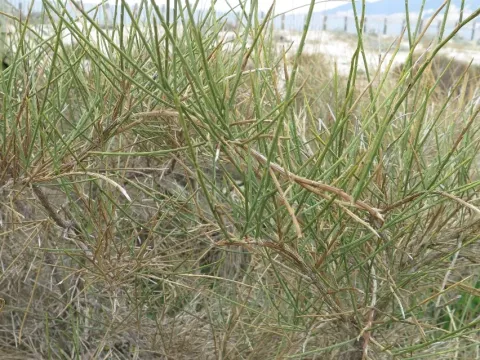
Botanically, it forms low, dense clumps of wiry, often thorny branches. Its small leaves are an adaptation to arid environments, helping the plant minimize water loss through transpiration during long periods of summer drought.
The plant requires full sun to thrive and produce its signature yellow flowers. It is highly intolerant of waterlogged conditions, making well-drained, porous soil an absolute necessity for successful cultivation in gardens or landscapes.
As a legume, it has the biological capability to fix nitrogen from the atmosphere through a symbiotic relationship with soil bacteria. This makes it a valuable plant for soil stabilization and improvement in ecologically challenging areas.
When cultivating this species, it is essential to mimic its natural Mediterranean habitat: high light intensity, excellent drainage, and minimal soil enrichment with nitrogen-heavy fertilizers, which can actually harm the plant's natural growth habit.
The most significant threat to Salzmann's broom is fungal infection caused by poor aeration or excessive humidity. Root rot is a common issue that occurs when the plant is kept in water-retentive or heavy clay soils.
Aphids represent the primary insect pest for this shrub. They tend to cluster on soft, new growth, causing stunted development and potentially vectoring viral diseases that weaken the overall health of the plant.
Spider mites can also be problematic during hot, dry summer months. Their feeding causes yellowing and eventual drop of the foliage, significantly detracting from the plant's ornamental appeal and vitality.
To mitigate these risks, growers should maintain adequate spacing between plants to ensure good airflow. Removing any dead or dying branches early in the season helps prevent the spread of localized pathogens.
Integrated pest management, focusing on biological controls and improving the immediate environmental conditions (drainage and sun exposure), is the best way to keep Salzmann's broom healthy and resilient over the long term.