
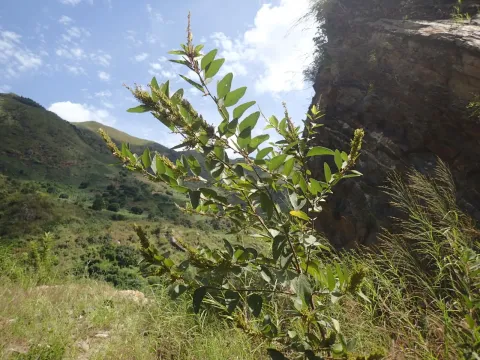
Velvet-leaf tick trefoil
Desmodium velutinum
The planting of Desmodium velutinum is typically scheduled at the beginning of the rainy season to ensure sufficient moisture for seed germination and initial establishment. In tropical climates, this ensures the crop takes advantage of the most favorable growth conditions.
What the section contains
Velvet-leaf tick trefoil
Seeds should be planted at a shallow depth of approximately 1 to 2 centimeters. Proper seedbed preparation is essential to ensure that the small seeds are in direct contact with the soil, promoting uniform and rapid emergence.
Scarification of seeds is a recommended practice to overcome dormancy caused by the hard seed coat. By slightly scratching or soaking the seeds, farmers can significantly increase the germination percentage and ensure a denser stand.
Row spacing should be determined by the primary goal: dense stands are preferred for pastures to maximize forage output, while wider spacing is ideal if the objective is seed multiplication or soil improvement in intercropping systems.
During the early stages of development, the crop benefits from minimal weed competition. Manual or light mechanical weeding is advised during the first few weeks until the plant establishes a canopy that naturally suppresses weeds.
Desmodium velutinum is a leguminous shrub or perennial herb native to tropical regions of Africa and Asia. It is highly valued for its ability to fix atmospheric nitrogen, contributing to overall soil health and long-term land productivity.
This crop thrives in a variety of soil types but shows a clear preference for well-drained loamy soils. It is particularly sensitive to waterlogging, as excessive moisture often leads to root rot and reduced plant vigor.
Regarding climate, the plant requires high temperatures and consistent moisture during the growing season. While it is somewhat drought-tolerant once established, its biomass production peaks in warm, humid conditions with adequate sunshine.
It displays remarkable adaptability, being able to grow under partial shade conditions. This feature makes it an excellent choice for agroforestry systems, where it can grow beneath trees without significantly competing for resources.
The plant's root system is robust, allowing it to explore deeper soil layers for water and nutrients. This physiological trait helps the crop maintain growth during shorter dry spells, ensuring a more stable harvest throughout the year.
The primary agricultural use of Desmodium velutinum is as a high-quality forage crop for livestock. Its leaves are rich in crude protein and minerals, making it a valuable feed component for cattle, sheep, and goats.
In addition to its role as fodder, the plant is widely used as a cover crop. Its dense growth habit helps prevent soil erosion on slopes, while its nitrogen-fixing capabilities naturally rejuvenate depleted soils for future planting cycles.
- Excellent protein source for improving animal weight gain and milk production.
- Effective nitrogen fixer, reducing the need for chemical fertilizers in crop rotations.
- Excellent ground cover for protecting topsoil from erosion by heavy rains.
- Useful in pharmacological research for its potential bioactive compounds.
When managed as a pasture, the crop is capable of sustaining repeated grazing, provided that rotational grazing is practiced to allow the plant time to recover and replenish its carbohydrate reserves between cycles.
Farmer interest in this crop is increasing due to its dual purpose: improving soil fertility while providing high-quality feed, thus serving as a sustainable solution for integrated farm management.
Fungal diseases represent the most significant threat to Desmodium velutinum, particularly in areas with high humidity and stagnant air. These conditions can trigger leaf spots and fungal decay, leading to biomass loss.
Insect pests, such as defoliating caterpillars and beetles, can cause damage during the active growing season. Regular scouting and early detection are crucial to managing these populations and preventing economic damage to the forage stand.
Root-knot nematodes can also affect the plant in certain regions, reducing its ability to absorb water and nutrients. Crop rotation with non-host species is an effective way to manage nematode levels in the soil.
Weed infestation during the establishment phase is a critical challenge. If weeds are not managed properly, they can outcompete the young Desmodium, leading to poor crop density and reduced final yield.
Integrated pest management (IPM) strategies, which prioritize biological control and field hygiene, are recommended to maintain a healthy crop without excessive reliance on synthetic chemical interventions.
For forage purposes, the optimal harvest time is during the early flowering stage. Cutting the plant at this point ensures the best balance between biomass quantity and protein quality, as nutritional value tends to decrease as the plant matures.
The cutting height should be maintained at roughly 10 to 15 centimeters above the ground. This practice promotes faster regrowth by protecting the auxiliary buds, which are essential for producing the next harvestable growth.
Seed harvesting should be performed when the pods turn brown and become dry to the touch. It is important to harvest before the pods naturally shatter to avoid significant seed losses in the field during the gathering process.
Post-harvest handling involves drying the material under controlled conditions. Proper drying prevents mold growth and ensures the forage remains safe for storage, retaining its palatability and nutritional profile for animal feeding.
Seeds must be thoroughly cleaned and stored in cool, dry conditions. Proper storage ensures that the seed's viability is maintained for the following growing season, allowing for reliable and predictable establishment of future stands.